Seismic vulnerability in buildings of the Portoviejo city: Reflections of 16-A
DOI:
https://doi.org/10.18779/ingenio.v6i1.565Keywords:
Constructive awareness, building, vulnerable infrastructure, earthquake 16-A, ground zeroAbstract
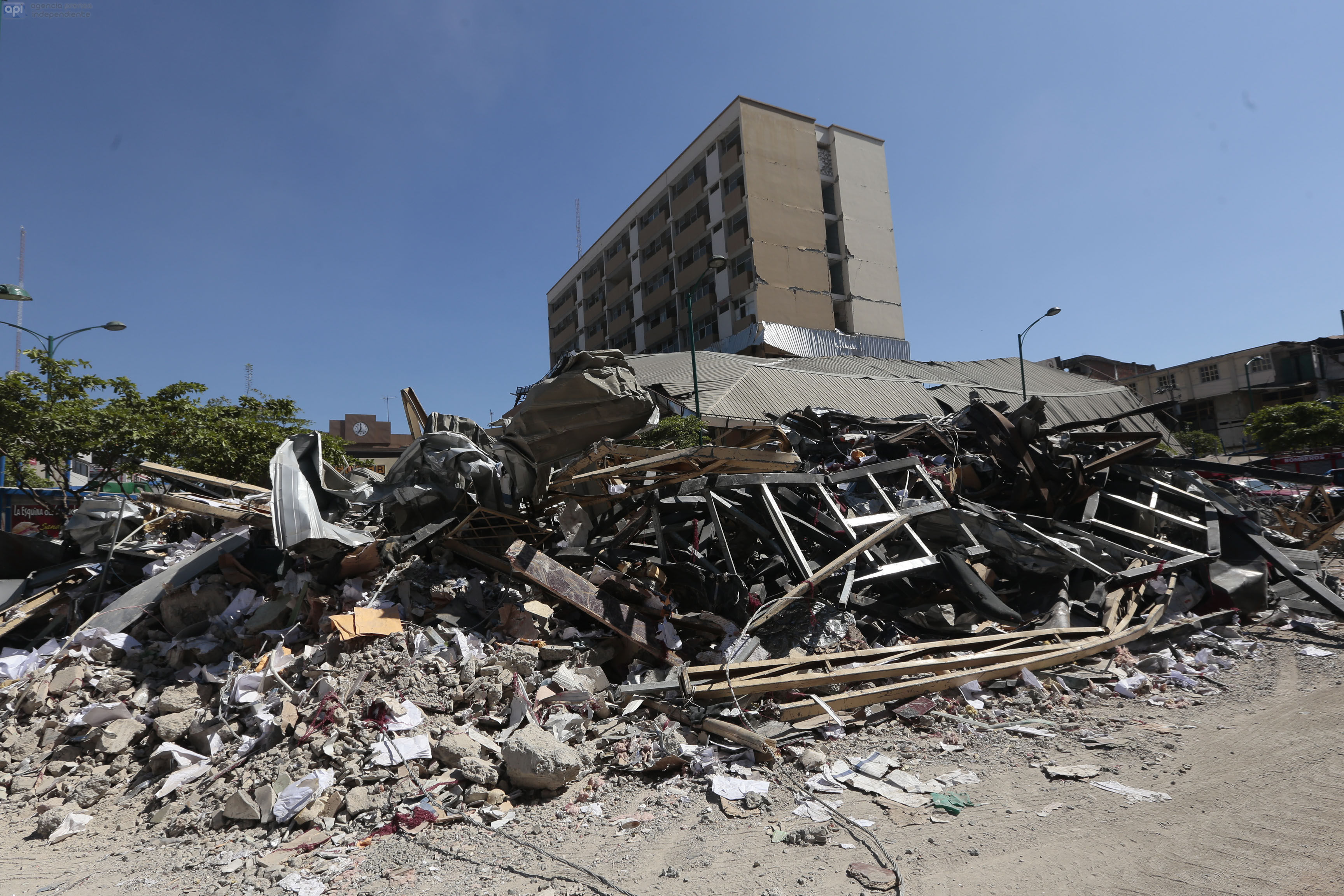
There are many reflections and conclusions derived after the seismic event of April 16, 2016, an event that had a strong impact on the infrastructure of the so-called ground zero of the city of Portoviejo, in some cases reconfiguring its urban and mobility dynamics. The role of professionals is one of the aspects most questioned by the community after the damage suffered by buildings and other civil works, causing great economic and human losses. The objective of the research is to identify the seismic vulnerability to which infrastructures are exposed to earthquakes based on the experience with the 16-A earthquake, using a documentary (bibliographical) and field (survey) research methodology, applied to the actors of the construction sector. The results obtained show that the aforementioned sector, with all its implicit branches, requires constant training and updating of knowledge and modern construction techniques.
Downloads
References
Comité de Reconstrucción y Reactivación, “Plan de Reconstrucción y Reactivación Productiva post terremoto - Mayo 2017”, Plan Reconstruyo Ecuador, Ecuador, Informe, 2017, [En línea]. Disponible en: https://djc.es/haErI
J. Bonachea, “Desarrollo, aplicación y validación de procedimientos y modelos para la evaluación de amenazas, vulnerabilidad y riesgo debidos a procesos geomorfológicos”. Tesis Doctoral, Departamento de ciencias de la tierra y física de la materia condensada, Universidad de Cantabria, Santander, España, 2006.
S. Safina, “Vulnerabilidad sísmica de edificaciones esenciales”. Tesis Doctoral, Departamento de ingeniería del terreno, cartográfica y geofísica, Universidad Politécnica de Cataluña, Barcelona, España, 2003.
R. Bonett, “Vulnerabilidad y riesgo sísmico de edificios. Aplicación a entornos urbanos en zonas de amenaza alta y moderada”. Tesis Doctoral, Departamento de ingeniería del terreno, cartográfica y geofísica, Universidad Politécnica de Cataluña, Barcelona, España, 2003.
R. Aguiar y Y. Mieles, “Análisis de los edificios que colapsaron en Portoviejo durante el terremoto del 16 de abril de 2016”, Ingeniería de Estructuras, vol. 21, no. 3, pp. 257-282, 2016.
Norma Ecuatoriana de la Construcción - NEC, MIDUVI NEC–SE-GC-2015 [En línea]. Disponible en: https://www.habitatyvivienda.gob.ec/documentos-normativos-nec-norma-ecuatoriana-de-la-construccion/
K. Alvarado, “Mapa de Microzonificación Geotécnico y Modelo Geológico-Geotécnico 3D de la Ciudad de Portoviejo”. Trabajo fin de grado, Facultad de Ingeniería en Geología y Petróleo, Escuela Politécnica Nacional, Quito, Ecuador, 2017.
F. Yépez, A. Barbat y J. Canas, Riesgo, peligrosidad y vulnerabilidad sísmica de edificios de mampostería, Barcelona: Centro Internacional de Métodos Numéricos en Ingeniería, 1995.
C. Caicedo, A. Barbat, J. Canas y R. Aguiar, Vulnerabilidad sísmica en edificios, Barcelona: Centro Internacional de Métodos Numéricos en Ingeniería, 1994.
H. Sánchez, C. Reyes y K. Mejía, Manual de términos en investigación científica, tecnológica y humanística, Lima: Universidad Ricardo Palma, 2018.
Z. Giménez y C. Suárez, “Diagnóstico de la gestión de la construcción e implementación de la constructabilidad en empresas de obras civiles”, Revista Ingeniería de Construcción, vol. 23, no. 1, pp. 4-17, 2008.
L. Suárez, “Factores incidentes en la calidad constructiva en viviendas de baja densidad. Caso de estudio viviendas circundantes a la Av. Maldonado”. Trabajo fin de grado, Facultad de Ingeniería, Universidad Nacional de Chimborazo, Riobamba, Ecuador, 2019.
R. Aguiar, “Fallas frecuentes durante los terremotos”, ESPEctativa, vol. 4, pp. 10-11, 2010.
G. Ponce y N. Pelegrín, “Reconstruir el centro o reconstruir la ciudad. Renovación post-sísmica. Caso de estudio en una ciudad ecuatoriana”, Revista Espacios, vol. 41, no. 34, pp. 46-68, 2020.
A. Castañeda y Y. Mieles, “Una mirada al comportamiento estructural de columnas, vigas, entrepisos y edificaciones durante el sismo de Ecuador 2016”, Revista Ingeniería de Construcción, vol. 32, no. 3, pp. 157-172, 2017.
M. Lara, H. Aguirre y M. Gallegos, “Estructuras Aporticadas de Hormigón Armado que Colapsaron en el Terremoto del 16 de Abril de 2016 en Tabuga–Ecuador”, Revista Politécnica, vol. 42, no. 1, pp. 37-46, 2018.
A. Pinto y R. Torres, “Evaluación postsísmica de edificaciones afectadas por terremotos”, Revista Ciencia e Ingeniería, vol. 37, no. 3, pp. 167-176, 2016.
V. Aguilera, “Vulnerabilidades y facilitación en el terremoto de abril 2016 Manabí”. Trabajo fin de grado, Gestión para el Desarrollo Local Sostenible, Universidad Politécnica Salesiana, Quito, Ecuador, 2018.
M. González, “La gestión del riesgo sísmico: recursos didácticos en internet”, Enseñanza de las Ciencias de la Tierra, vol. 19, no. 3, pp. 356-62, 2011.
Published
How to Cite
Issue
Section
License
Copyright (c) 2023 Gema María Menéndez-Navarro , Juan Gabriel García-García , Adrián Eliceo Reyna-García

This work is licensed under a Creative Commons Attribution-NonCommercial-ShareAlike 4.0 International License.
Licensing Agreement
This journal provides free access to its content through its website following the principle that making research available free of charge to the public supports a larger exchange of global knowledge.
Web content of the journal is distributed under a Attribution-NonCommercial-ShareAlike 4.0 International.
Authors may adopt other non-exclusive license agreements for the distribution of the version of the published work, provided that the initial publication in this journal is indicated. Authors are allowed and recommended to disseminate their work through the internet before and during the submission process, which can produce interesting exchanges and increase citations of the published work.