Digital Inaccessibility of Women Entrepreneurs in Marginal Communities of Guayaquil- Ecuador
DOI:
https://doi.org/10.18779/ingenio.v6i1.562Keywords:
Digital Illiteracy, Digital Divide, Marginal Communities, Female EntrepreneurshipAbstract
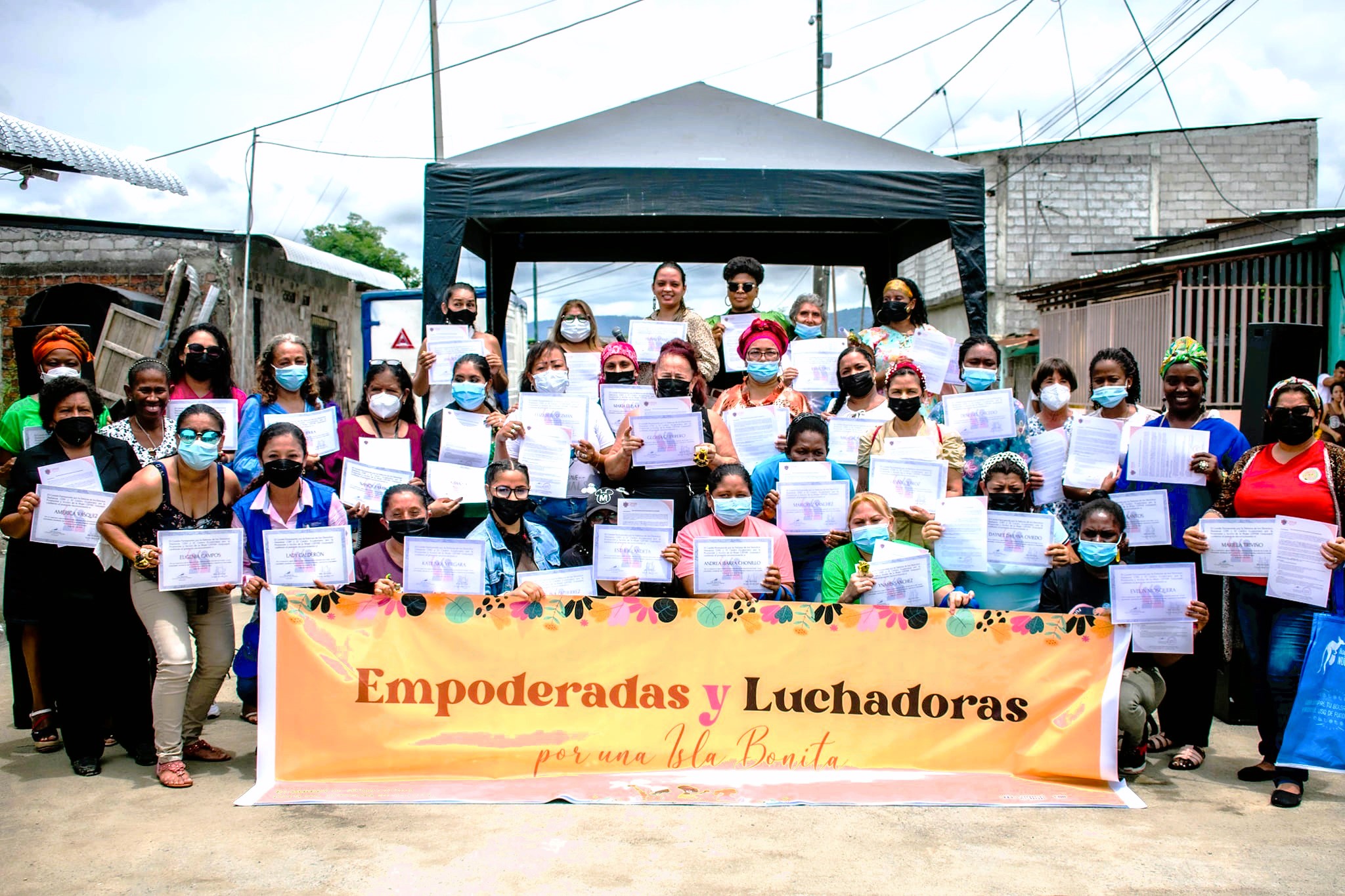
Female entrepreneurship in marginal communities presents many obstacles to its growth, one of them is the digital divide due to lack of internet access and digital illiteracy. This study presents the testimony of a group of women entrepreneurs from a marginal community in Guayaquil - Ecuador, who start businesses to cover their basic needs. The methodology used was mixed, qualitative through the use of structured and in-depth interviews using the NVivo software, and quantitative trough a survey applying logistic regression in SPSS. The findings of this study demonstrate the digital illiteracy of women entrepreneurs from marginal communities, who require technological training to avoid difficulties when surfing the net, even more so in the current times when, due to the pandemic, most businesses apply digital strategies to stay in the market.
Downloads
References
Organización de las Naciones Unidas, “Informe de los Objetivos de Desarrollo Sostenible 2019,” 2019.
V. Lasio, A. Amaya, J. Zambrano, and X. Ordeñana, “Global Entrepreneurship Monitor Ecuador 2019/2020,” ESPAE: Guayaquil, Ecuador, 2020.
S. Delgado-Estrada, R. Carrasco-Reyes, J. Chabusa-Vargas, and C. Mackay-Castro, “Emprendimiento femenino por necesidad en Ecuador,” Rev. Venez. Gerenc., vol. 25, no. 91, pp. 1221–1233, 2020.
A. T. Torres, Á. F. B. Álava, and R. P. Moncayo, “La afectación de los emprendedores en época de pandemia,” Rev. Publicando, vol. 8, no. 32, pp. 51–60, 2021.
Instituto Nacional de Estadísticas y Censos de Ecuador, “Encuesta Nacional de Empleo, Desempleo y Subempleo 2021,” 2021.
Banco Central del Ecuador, “Reporte de pobreza, ingreso y desigualdad. Resultados a junio de 2021,” 2021.
Consejo Nacional para la Igualdad de Género, “Lineamientos del Consejo Nacional para la Igualdad de Género frente a la crisis sanitaria, para su implementación en las instituciones del,” 2020.
M. Karyotaki, L. Bakola, A. Drigas, and C. Skianis, “Women’s Leadership via Digital Technology and Entrepreneurship in business and society,” Tech. Soc. Sci. J., vol. 28, p. 246, 2022.
H. P. Segarra, J. L. Chabusa, C. M. Legarda, and E. I. Espinoza, “Perfil de la Mujer Emprendedora en Latinoamérica: un marco referencial para Ecuador,” Rev. Espac. ISSN, vol. 798, p. 1015, 2020.
R. G. Aquino Reyes and A. J. Castaño Vargas, “El emprendimiento femenino y su incidencia en la zona urbana de la ciudad de Guayaquil,” Universidad de Guayaquil Facultad de Ciencias Administración, 2019.
S. Nambisan, M. Wright, and M. Feldman, “The digital transformation of innovation and entrepreneurship: Progress, challenges and key themes,” Res. Policy, vol. 48, no. 8, p. 103773, 2019.
F. von Briel, P. Davidsson, and J. Recker, “Digital technologies as external enablers of new venture creation in the IT hardware sector,” Entrep. Theory Pract., vol. 42, no. 1, pp. 47–69, 2018.
Instituto Nacional de Estadisticas y Censo INEC, “Encuesta multiporpósito - TIC 2019,” 2019.
J. Zeng and Z. Khan, “Value creation through big data in emerging economies: The role of resource orchestration and entrepreneurial orientation,” Manag. Decis., 2018.
B. Orser, A. Riding, and Y. Li, “Technology adoption and gender-inclusive entrepreneurship education and training,” Int. J. Gend. Entrep., 2019.
C. Teddlie and A. Tashakkori, “Overview of contemporary issues in mixed methods research,” Sage Handb. Mix. methods Soc. Behav. Res., vol. 2, pp. 1–44, 2010.
S. Tracy, “Calidad cualitativa: ocho pilares para una investigación cualitativa de calidad,” Márgenes Rev. Educ. la Univ. Málaga, vol. 2, no. 2, pp. 173–201, 2021.
B. Palacios Vicario, A. Gutiérrez García, M. C. Sánchez Gómez, and others, “NVIVO una herramienta de utilidad en el mundo de la comunicación,” 2013.
M. Progresistas, “Quienes somos – Mujeres Progresistas,” 2021. [Online]. Available: https://mujeresprogresistas.com/quienes-somos/.
U. S. E. Ecuador, “Empoderamiento femenino y tenacidad,” 2020. [Online]. Available: https://www.facebook.com/USEmbassyEC/videos/141825500770028/.
Published
How to Cite
Issue
Section
License
Copyright (c) 2023 Luz-Elvira Vásquez-Luna , Fernando Proaño Sánchez, Nelly Reina Villón Pérez, Ingrid Dayana Zamora Ruiz

This work is licensed under a Creative Commons Attribution-NonCommercial-ShareAlike 4.0 International License.
Licensing Agreement
This journal provides free access to its content through its website following the principle that making research available free of charge to the public supports a larger exchange of global knowledge.
Web content of the journal is distributed under a Attribution-NonCommercial-ShareAlike 4.0 International.
Authors may adopt other non-exclusive license agreements for the distribution of the version of the published work, provided that the initial publication in this journal is indicated. Authors are allowed and recommended to disseminate their work through the internet before and during the submission process, which can produce interesting exchanges and increase citations of the published work.