Optimization of media for the production of antimicrobial bacteriocins obtained from BAL from Chicha de chontaduro
DOI:
https://doi.org/10.18779/ingenio.v8i1.909Keywords:
Bacteriocins, LAB, fermentation, kinetic parametersAbstract
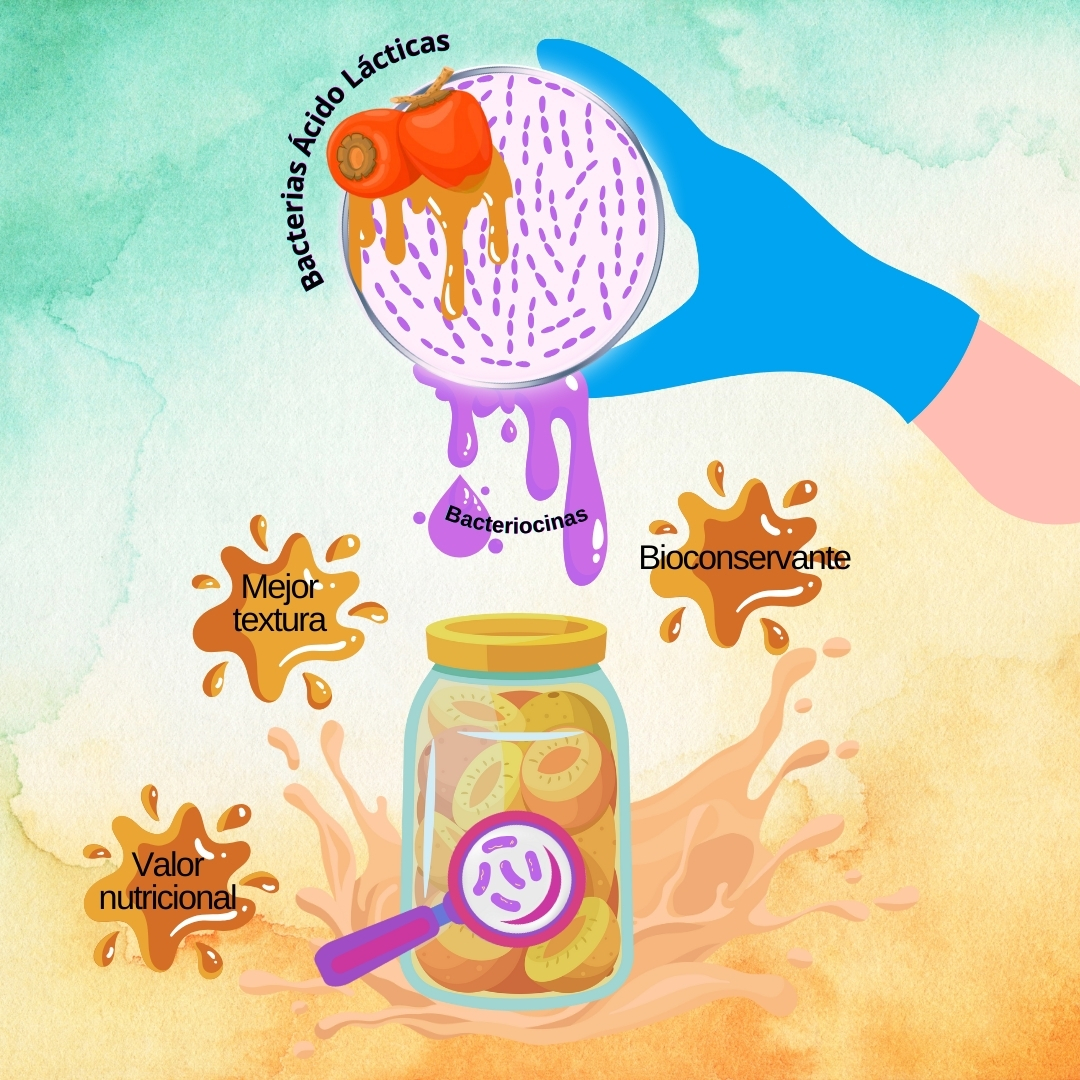
Lactic acid bacteria (LAB) are anaerobic microorganisms present in fermented beverages such as chicha de chontaduro. They are known for their potential to synthesize bacteriocins that are used as additives for food biopreservation due to their antimicrobial capacity. The objective of this research was to isolate and characterize bacteriocin-producing bacteria in chicha de chontaduro, a traditional fermented beverage from the Ecuadorian Amazon region, considering different types of substrates (Glucose-peptone and Fructose-peptone), for its application as an antimicrobial agent. The physicochemical and microbiological characterization of the fermented beverage was carried out on the third day and the bacteria were isolated. The BAL colony was identified with biochemical and morphological tests, fermentation systems supplemented with Glucose-peptone and Fructose-peptone at different concentrations were performed: 0.5 %, 2 %, 5 % and 7 %, measurements of kinetic parameters, including pH, acidity, absorbance and Brix degrees, were carried out at intervals of 0, 24, 48 and 72 hours, in order to identify the optimal conditions to maximize bacteriocin production by analyzing bacterial growth and the efficiency of the fermentation process. Kinetic parameters were evaluated to determine the effect of substrate type and concentration, as well as fermentation time on bacteriocin production and the best treatment was determined with a trifactorial design A*B*C, obtaining a total of 32 treatments with three replicates. The antimicrobial activity was evaluated with the well diffusion method for the three pathogenic bacteria (Lysinibacillus macroides, Staphylococcus aureus and Bacillus cereus). The most effective treatment was treatment 32, which consisted of 7 % fructose peptone + 72 hours. This treatment showed higher bacteriocin production and improved fermentation efficiency with the following kinetic parameters: pH 3,53, acidity 0,30, absorbance 3,49 and Brix 7,53. An inverse correlation was observed between pH and absorbance, reflecting robust bacterial growth, and a direct correlation between acidity and absorbance, indicating increased production of organic acids. Fructose favored the production of bacteriocins, highlighting the importance of properly adjusting substrates. In addition, factors such as temperature and the presence of inhibitors should be evaluated in future research.
Downloads
References
G. Velázquez-Sámano, R. Collado-Chagoya, R. A. Cruz-Pantoja, A. A. Velasco-Medina y J. Rosales-Guevara, “Reacciones de hipersensibilidad a aditivos alimentarios”, Revista Alergia México, vol. 66, no. 3, pp. 329-339, jun. 2019. [En línea]. Disponible en: https://doi.org/10.29262/ram.v66i3.613
J.A. Carbajal-Sánchez y P.A. Moreno-Pérez, “Aditivos alimentarios adicionados en alimentos envasados o enlatados en México ¿información confiable?”, Revista Española de Nutrición Humana y Dietética, vol. 27, no. 1, pp. 51-62, feb. 2023. [En línea]. Disponible en: https://doi.org/10.14306/renhyd.27.1.1768%20
Norma general del codex para los aditivos alimentarios. revisión 1997, 1999, 2001, 2003, 2004, 2005, 2006, 2007, 2008, 2009, 2010, 2011, 2012, 2013, 2014, 2015, 2016, 2017, 2018, 2019, 2021, 2023, Codex STAN 192-1995, Organización de las Naciones Unidas para la Alimentación y la Agricultura (FAO), Organización Mundial de la Salud (OMS), Roma (Italia), 1995. [En línea]. Disponible en: https://n9.cl/8uwz2
Instructivo Externo. Criterios técnicos para la categorización del riesgo sanitario de alimentos procesados. Versión [6.0], Agencia Nacional de Regulación, Control y Vigilancia Sanitaria (ARCSA), Ecuador, 2023. [En línea]. Disponible: https://lc.cx/sfFoRF
M. Afshar, S.A. Moallem, J. Khayatzadeh, and M.Shahsavan, “Teratogenic effects of long term consumption of potassium benzoate on eye development in BALB/c fetal mice”, Iranian journal of basic medical sciences, vol. 16, no. 4, pp. 584-589, apr. 2013. [Online]. Available: https://pubmed.ncbi.nlm.nih.gov/24250932/
N. Zengin, D. Yubazsiglo, F. Unal, S Yilmaz, and H Aksoy, “The evaluation of the genotoxicity of two food preservatives: Sodium benzoate and potassium benzoate”, Food Chemical Toxicology, vol. 49, no. 4, pp. 763–769, apr. 2011. [Online]. Available: https://doi.org/10.1016/j.fct.2010.11.040
H. J. Tsay, Y. H. Wang, W. L. Chen, M. Y. Huang, and Y. H. Chen, “Treatment with sodium benzoate leads to malformation of zebrafish larvae”, Neurotoxicology and Teratology, vol. 29, no. 5, pp. 562–569, 2007. [Online]. Available: https://doi.org/10.1016/j.ntt.2007.05.001
I. S. Khan, K. B. Dar, S. A. Ganie, and M. N. Ali, “Toxicological impact of sodium benzoate on inflammatory cytokines, oxidative stress and biochemical markers in male Wistar rats”, Drug and chemical toxicology, vol. 45, no. 3, pp. 1345–1354, oct. 2022. [Online]. Available: https://doi.org/10.1080/01480545.2020.1825472
L. Hrncirova, et al. “Human gut microbes are susceptible to antimicrobial food additives in vitro”, Folia Microbiol, vol. 64, no. 4, pp. 497–508, jan. 2019. [Online]. Available: https://doi.org/10.1007/s12223-018-00674-z
S. mamur D. Yubazsiglo, F Ünal, and H. Aksoy, “Genotoxicity of food preservative sodium sorbate in human lymphocytes in vitro”, Cytotechnology, vol. 64, no. 5, pp. 553–562, feb. 2012. [Online]. Available: https://doi.org/10.1007/s10616-012-9434-5
M. Liu, J. Lu, J. Hu, Y. Chen, X. Deng, J. Wang, S, Zhang, J. Guo, W. Li, and S. Guan, “Sodium sulfite triggered hepatic apoptosis, necroptosis, and pyroptosis by inducing mitochondrial damage in mice and AML-12 cells”, Journal of Hazardous Materials, vol. 467, pp. 133719, apr. 2024. [Online]. Available: https://doi.org/10.1016/j.jhazmat.2024.133719
M. Padovano, M. Aromatario, S. D’Errico, M. Concato, F. Manetti, M. Chiara David, M. Scopetti, P. Frati, and V. Fineschi, “Sodium Nitrite Intoxication and Death: Summarizing Evidence to Facilitate Diagnosis”, International journal of environmental research and public health, vol. 19, no. 21, pp. 13996, oct. 2022. [Online]. Available: https://doi.org/10.3390/ijerph192113996
N. S. Terefe, “Food fermentation”. Elsevier eBooks, 2016. [Online]. Available: https://doi.org/10.1016/b978-0-08-100596-5.03420-x
S.M. Vásquez, H. Suárez y S. Zapata, “Utilización de sustancias antimicrobianas producidas por bacterias acido lácticas en la conservación de la carne”, Revista chilena de nutrición, vol. 36, no. 1, pp. 64-71, mar. 2009. [En línea]. Disponible en: https://doi.org/10.4067/s0717-75182009000100007
J. Zheng, M. G. Gänzle, X. B. Lin, L. Ruan, and M. Sun, “Diversity and dynamics of bacteriocins from human microbiome”, Environmental Microbiol, vol. 17, no. 6, pp. 2133–2143, oct. 2014. [Online]. Available: https://doi.org/10.1111/1462-2920.12662
T. K. Sahoo, P. K. Jena, A. K. Patel, and S. Seshadri, “Purification and Molecular Characterization of the Novel Highly Potent Bacteriocin TSU4 Produced by Lactobacillus animalis TSU4”, Applied Biochemistry and Biotechnology, vol. 177, no. 1, pp. 90–104, aug. 2015. [Online]. Available: https://doi.org/10.1007/s12010-015-1730-z
S. Kaur y S. Kaur, “Bacteriocins as Potential Anticancer Agents”, Frontiers Pharmacol, vol. 6, nov. 2015. [Online]. Available: https://doi.org/10.3389/fphar.2015.00272
G. Preciado, M. Michel, S.L. Villarreal-Morales, A.C. Flores-Gallegos, J. Aguirre-Joya, J. Morlett-Chavez, C.N. Aguilar, and R. Rodriguez-Herrera “Bacteriocins and Its Use for Multidrug-Resistant Bacteria Control”, Antobiotic Resistancet, pp. 329–349, 2016. [Online]. Available: https://doi.org/10.1016/B978-0-12-803642-6.00016-2
P. Mak, “Chapter 13 - Staphylococcal Bacteriocins”, en Pet-To-Man Travelling Staphylococci, Academic Press, 2018, pp. 161–171. [Online]. Available: https://doi.org/10.1016/B978-0-12-813547-1.00013-3
F. Gaggia, D. Di Gioia, L. Baffoni, and B. Biavati, “The role of protective and probiotic cultures in food and feed and their impact in food safety”, Trends in Food Science & Technologyl, vol. 22, pp. S58—S66, nov. 2011. [Online]. Available: https://doi.org/10.1016/j.tifs.2011.03.003
A. Darbandi, A. Asadi, M. Mahdizade Ari, E. Ohadi, M. Talebi, M. Halaj Zadeh, A. Darb Emamie, R. Ghanavati y M. Kakanj, “Bacteriocins: Properties and potential use as antimicrobials”, Journal of Clinical Laboratory Analysis, vol. 36, no. 1, 2021. [En línea]. Disponible: https://doi.org/10.1002/jcla.24093
M. Hassan, M. Kjos, I. F. Nes, D. B. Diep y F. Lotfipour, “Natural antimicrobial peptides from bacteria: characteristics and potential applications to fight against antibiotic resistance”, Journal of Applied Microbiology, vol. 113, no. 4, pp. 723–736, oct. 2012. [Online]. Available: https://doi.org/10.1111/j.1365-2672.2012.05338.x
P. D. Cotter, C. Hill, and R. P. Ross, “Bacteriocins: developing innate immunity for food”, Nature Reviews Microbiology, vol. 3, no. 10, pp. 777–788, oct, 2005. [Online]. Available: https://doi.org/10.1038/nrmicro1273
R. Kumariya, A. K. Garsa, Y. S. Rajput, S. K. Sood, N. Akhtar, and S. Patel, “Bacteriocins: Classification, synthesis, mechanism of action and resistance development in food spoilage causing bacteria”, Microbial Pathogenesis, vol. 128, pp. 171–177, mar. 2019. [Online]. Available: https://doi.org/10.1016/j.micpath.2019.01.002
C. Chaves López, A. Serio, C. D. Grande Tovar, R. A. C. Mulet, J. Delgado Ospina, and A. Paparella, “Traditional fermented foods and beverages from a microbiological and nutritional perspective: the Colombian Heritage”, Comprehensive Reviews in Food Science and Food Safety, vol. 13, no. 5, pp. 1031-1048, aug. 2014. [Online]. Available: https://doi.org/10.1111/1541-4337.12098
F. Faria-Oliveira, et al. “The role of yeast and lactic acid bacteria in the production of fermented beverages in south america”, en Food Production and Industry. InTech, oct. 2015. [Online]. Available: https://doi.org/10.5772/60877
Bebidas alcohólicas. Cerveza. Requisitos. NTE INEN 2 262:2003, Norma Técnica Ecuatoriana Obligatoria (NTE), 2003. [En línea]. Disponible en: https://n9.cl/1ap1z
V. Martín, B. Gallego y C. Pulido Lería, Elaboración de vinos, otras bebidas alcohólicas, aguas, cafés e infusiones, HOTR0209 - sumillería. IC Ed., 2021. [En línea]. Disponible en: https://n9.cl/dkx5w
C. Miramontes-Corona, A. Cetina-Corona, M. E. Macías-Rodríguez, A. Escalante, R. I. Corona-González, and G. Toriz, “Lactic acid bacterial fermentation of esterified agave fructans in simulated physicochemical colon conditions for local delivery of encapsulated drugs”, Fermentation, vol. 10, no. 478, sep. 2024. [Online]. Available: https://doi.org/10.3390/fermentation10090478
Y. L. Aguirre Garcia, et al. “Lactic acid fermentation in the food industry and bio-preservation of food”, Fermentation, vol. 10, no. 168, mar, 2024. [Online]. Available: https://doi.org/10.3390/fermentation10030168.
K. Khalid, “An overview of lactic acid bacteria”, International Journal of Biosciences, 2021. [Online]. Available: https://n9.cl/22zzop
K. Khalid, “An overview of lactic acid bacteria”, International Journal of Biosciences, 2021. [Online]. Available: https://n9.cl/22zzop
B. L. D. Monroy, A. E. Iglesias y E. Valiño, “Consorcios microbianos con actividad ácido-láctica promisoria aislados desde inoculantes bacterianos nativos para ensilajes”, Revista Ciencia y Agricultura, vol. 11, no. 1, pp. 17–25, en. 2014. [En línea]. Disponible en: https://n9.cl/ik55z
L. Guamán, S. Zapata, M. Serrano, and G. A. Trueba P., “Characterization of lactic acid bacteria isolated from traditional Ecuadorian fermented foods”, ACI Avances en ciencia e ingeniería, vol. 6, no. 1, jun. 2014. [Online]. Available: https://doi.org/10.18272/aci.v6i1.155
A. B. Snyder, and R. W. Worobo, “Chemical and genetic characterization of bacteriocins: antimicrobial peptides for food safety”, Journal of the Science of Food and Agriculture, vol. 94, no. 1, pp. 28-44, aug. 2013. [Online]. Available: https://doi.org/10.1002/jsfa.6293
M. G. Gänzle, “Revisitando el metabolismo láctico: metabolismo de las bacterias del ácido láctico en las fermentaciones alimentarias y el deterioro de los alimentos”, Current Opinion in Food Science, vol. 2, pp. 106–117, apr. 2015. [En línea]. Disponible en: https://doi.org/10.1016/j.cofs.2015.03.001
J. Cleveland, T. J. Montville, I. F. Nes, and M. L. Chikindas, “Bacteriocins: safe, natural antimicrobials for food preservation”, International Journal of Food Microbiology, vol. 71, no. 1, pp. 1–20, dec. 2001. [Online]. Available: https://doi.org/10.1016/S0168-1605(01)00560-8
L. Alquicira, “Determinación del mecanismo de resistencia a la acción inhibitoria de la bacteriocina producida por Pediococcus parvulus MXVK 133”, Tesis de posgrado, Biotecnología, Universidad Autónoma Metropolitana Unidad Iztapalapa, Ciudad de México, México, 2006. [En línea]. Disponible en: https://bindani.izt.uam.mx/concern/tesiuams/q237hs18x?locale=es
M. A. Riley, and J. E. Wertz, “Bacteriocin diversity: ecological and evolutionary perspectives”, Biochimie, vol. 84, no. 5–6, pp. 357–364, 2002. [Online]. Available: https://doi.org/10.1016/S0300-9084(02)01421-9.
M. Papagianni, “Food fermentation and production of biopreservatives”, in Handbook of Animal-Based Fermented Food and Beverage Technology, 2nd ed, pp. 109–124, 2012. [Online]. Available: https://doi.org/10.1201/b12084-8
D. I. Serrazanetti, D. Gottardi, C. Montanari, and A. Gianotti, “Dynamic stresses of lactic acid bacteria associated to fermentation processes”, in InTech eBooks, 2013. [Online]. Available: https://doi.org/10.5772/51049
K. Papadimitriou, A, Alegría, P. A. Bron, M. de Angelis, M. Gobbetti, M. Kleerebezem, J. A. Lemos, D. M. Linares, P. Ross, C. Stanton, F. Turroni, D. van Sinderen, P. Varmanen, M. Ventura, M. Zúñiga, E. Tsakalidou, and J. Kok, “Stress physiology of lactic acid bacteria”, Microbiology and Molecular Biology Reviews, vol. 80, no. 3, pp. 837-890, july. 2016. [Online]. Available: https://doi.org/10.1128/mmbr.00076-15
V. Biscola, Y. Choiset, H. Rabesona, J. Chobert, T. Haertlé, and B. Franco, “Brazilian artisanal ripened cheeses as sources of proteolytic lactic acid bacteria capable of reducing cow milk allergy”, Journal of Applied Microbiology, vol. 125, pp. 564–574, aug, 2018. [Online]. Available: https://doi.org/10.1111/jam.13779
Published
How to Cite
Issue
Section
License
Copyright (c) 2025 Evelyn Marlein Serpa Gavilánez, Viteri Uribe Brandon Fernando, Sungey Naynee Sánchez Llaguno, Juan Alejandro Neira Mosquera

This work is licensed under a Creative Commons Attribution-NonCommercial-ShareAlike 4.0 International License.
Licensing Agreement
This journal provides free access to its content through its website following the principle that making research available free of charge to the public supports a larger exchange of global knowledge.
Web content of the journal is distributed under a Attribution-NonCommercial-ShareAlike 4.0 International.
Authors may adopt other non-exclusive license agreements for the distribution of the version of the published work, provided that the initial publication in this journal is indicated. Authors are allowed and recommended to disseminate their work through the internet before and during the submission process, which can produce interesting exchanges and increase citations of the published work.