Literature review on the use of Artificial Intelligence focused on visual impairment care
DOI:
https://doi.org/10.18779/ingenio.v5i1.472Keywords:
Artificial intelligence, blindness, visual impairment, visually impairedAbstract
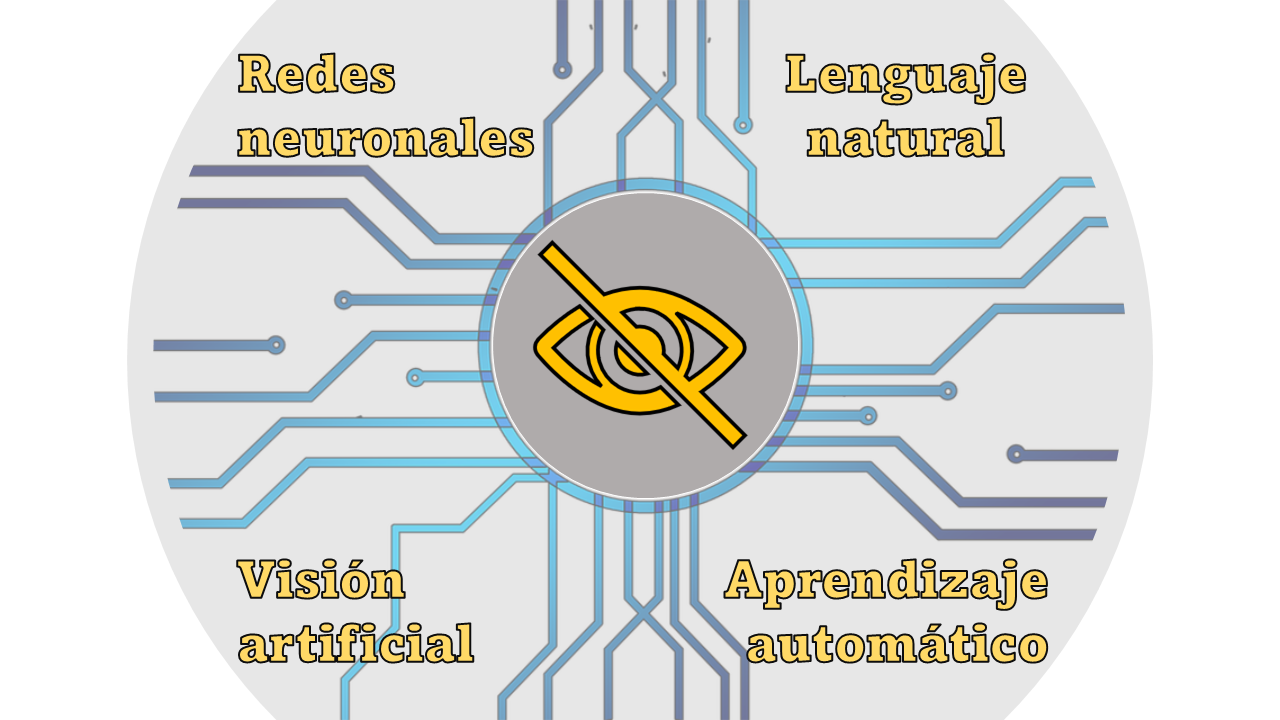
This paper performs a systematic literature review focused on the attention to visual impairment supported by artificial intelligence categorizing the relevance of contributions on machine learning. The main objective is to determine techniques that are applied for the attention to visual impairment using artificial intelligence during the years 2017 to 2021 from different relevant studies found in indexed bases such as Scopus, Web of Science, IEEExplore and Springer. From a total of 545 publications, 33 articles categorized in four areas, machine learning, artificial neural networks, natural language processing and artificial vision related to the field of visual impairment were determined. There is evidence of application trends with techniques that involve artificial intelligence and that allow opening fields where technology has a challenge that to some extent is a support to people with low vision and propose mechanisms to improve the quality of life.
Downloads
References
J. Liu, “Artificial Intelligence and Data Analytics Applications in Healthcare General Review and Case Studies,” ACM Int. Conf. Proceeding Ser., pp. 49–53, 2020, doi: 10.1145/3433996.3434006.
J. Llerena-Izquierdo, F. Procel-Jupiter, and A. Cunalema-Arana, “Mobile Application with Cloud-Based Computer Vision Capability for University Students’ Library Services,” Adv. Intell. Syst. Comput., vol. 1277, pp. 3–15, Jun. 2021, doi: 10.1007/978-3-030-60467-7_1.
K. Chakravadhanula, “A smartphone-based test and predictive models for rapid, non-invasive, and point-of-care monitoring of ocular and cardiovascular complications related to diabetes,” Informatics Med. Unlocked, vol. 24, Oct. 2021, doi: 10.1016/j.imu.2020.100485.
A. Russo, “Some Ethical Issues in the Review Process of Machine Learning Conferences,” Jun. 2021, [Online]. Available: http://arxiv.org/abs/2106.00810.
D. Hendrycks, N. Carlini, J. Schulman, and J. Steinhardt, “Unsolved Problems in ML Safety,” Sep. 2021, [Online]. Available: https://arxiv.org/abs/2109.13916v1.
X. Zhang, Y. Hu, J. Fang, Z. Xiao, R. Higashita, and J. Liu, “Machine Learning for Cataract Classification and Grading on Ophthalmic Imaging Modalities: A Survey,” vol. 14, no. 8, Dec. 2020, [Online]. Available: http://arxiv.org/abs/2012.04830.
A. Radford et al., “Learning Transferable Visual Models From Natural Language Supervision,” Feb. 2021, [Online]. Available: http://arxiv.org/abs/2103.00020.
D. Müller, I. Soto-rey, and F. Kramer, “Multi-Disease Detection in Retinal Imaging Based on Ensembling Heterogeneous Deep Learning Models,” no. March, pp. 6–11, Mar. 2021, [Online]. Available: https://arxiv.org/abs/2103.14660v1.
A. Schmidt, “Interactive Human Centered Artificial Intelligence: A Definition and Research Challenges,” ACM Int. Conf. Proceeding Ser., 2020, doi: 10.1145/3399715.3400873.
Organización Mundial de la Salud, “Ceguera y discapacidad visual,” Feb. 2021. .
A. G. Sareeka, K. Kirthika, M. R. Gowthame, and V. Sucharitha, “Impaired Using Image Recognition,” 2018 2nd Int. Conf. Inven. Syst. Control, no. Icisc, pp. 174–178, 2018.
S. Chinchole and S. Patel, “Artificial intelligence and sensors based assistive system for the visually impaired people,” Proc. Int. Conf. Intell. Sustain. Syst. ICISS 2017, no. Iciss, pp. 16–19, 2018, doi: 10.1109/ISS1.2017.8389401.
C. Mendieta, C. Ramos, and A. Cerón, “Towards the development of a system for the support of people with visual disabilities using computer vision,” Commun. Comput. Inf. Sci., vol. 851, pp. 48–53, 2018, doi: 10.1007/978-3-319-92279-9_6.
S. Santoki and N. Patvardhan, “To research the advantages and limitations of AI based app in the indian context for the visually challenged,” Int. J. Innov. Technol. Explor. Eng., vol. 8, no. 6 Special Issue 4, pp. 271–278, 2019, doi: 10.35940/ijitee.F1056.0486S419.
E. Vocaturo and E. Zumpano, “The contribution of AI in the detection of the Diabetic Retinopathy,” Proc. - 2020 IEEE Int. Conf. Bioinforma. Biomed. BIBM 2020, pp. 1516–1519, 2020, doi: 10.1109/BIBM49941.2020.9313541.
G. Silva, P. S. Neto, R. S. Moura, A. C. Araujo, O. C. D. C. Castro, and I. Ibiapina, “An Approach to Support the Selection of Relevant Studies in Systematic Review and Systematic Mappings,” Proc. - 2019 Brazilian Conf. Intell. Syst. BRACIS 2019, pp. 824–829, 2019, doi: 10.1109/BRACIS.2019.00147.
E. Pinheiro Lima Neto, R. Martins Da Costa, D. Silva Alves Fernandes, and F. Alphonsus Alves De Melo Nunes Soares, “Sensory substitution of vision: A systematic mapping and a deep learning object detection proposition,” Proc. - Int. Conf. Tools with Artif. Intell. ICTAI, vol. 2019-Novem, pp. 1815–1819, 2019, doi: 10.1109/ICTAI.2019.00274.
Z. A. Nor Hisham, M. A. Faudzi, A. A. Ghapar, and F. A. Rahim, “A Systematic Literature Review of the Mobile Application for Object Recognition for Visually Impaired People,” 2020 8th Int. Conf. Inf. Technol. Multimedia, ICIMU 2020, pp. 316–322, 2020, doi: 10.1109/ICIMU49871.2020.9243523.
L. Wen, Y. Lu, H. Li, S. Long, and J. Li, “Detecting of research front topic in artificial intelligence based on SciVal,” ACM Int. Conf. Proceeding Ser., pp. 145–149, 2020, doi: 10.1145/3421766.3421799.
Y. Wen et al., “On Automatic Detection of Central Serous Chorioretinopathy and Central Exudative Chorioretinopathy in Fundus Images,” Proc. - 2020 IEEE Int. Conf. Bioinforma. Biomed. BIBM 2020, pp. 1161–1165, 2020, doi: 10.1109/BIBM49941.2020.9313274.
R. Motz et al., “Automating systematic mappings, adding quality to quantity,” Proc. - 2017 IEEE/ACM 39th Int. Conf. Softw. Eng. Companion, ICSE-C 2017, vol. 2, pp. 167–168, 2017, doi: 10.1109/ICSE-C.2017.111.
C. Noosrikong, S. Ngamsuriyaroj, and S. P. N. Ayudhya, “Identifying focus research areas of computer science researchers from publications,” IEEE Reg. 10 Annu. Int. Conf. Proceedings/TENCON, vol. 2017-December, pp. 811–816, 2017, doi: 10.1109/TENCON.2017.8227970.
A. Fombona Cadavieco, M. Pascual Sevillano, and M. González Videgaray, “M-learning y realidad aumentada revisión de literatura científica en el repositorio WoS,” Comun. Rev. científica Iberoam. Comun. y Educ., pp. 63–72, 2017.
B. S. Lin, C. C. Lee, and P. Y. Chiang, “Simple smartphone-based guiding system for visually impaired people,” Sensors (Switzerland), vol. 17, no. 6, 2017, doi: 10.3390/s17061371.
J. Wang, K. Yang, W. Hu, and K. Wang, “An Environmental Perception and Navigational Assistance System for Visually Impaired Persons Based on Semantic Stixels and Sound Interaction,” Proc. - 2018 IEEE Int. Conf. Syst. Man, Cybern. SMC 2018, pp. 1921–1926, 2019, doi: 10.1109/SMC.2018.00332.
H. Alsaid, L. Alkhatib, A. Aloraidh, S. Alhaidar, and A. Bashar, “Deep Learning Assisted Smart Glasses as Educational Aid for Visually Challenged Students,” 2019 2nd Int. Conf. New Trends Comput. Sci. ICTCS 2019 - Proc., 2019, doi: 10.1109/ICTCS.2019.8923044.
F. Al-Muqbali, N. Al-Tourshi, K. Al-Kiyumi, and F. Hajmohideen, “Smart Technologies for Visually Impaired: Assisting and conquering infirmity of blind people using AI Technologies,” Proc. - 2020 12th Annu. Undergrad. Res. Conf. Appl. Comput. URC 2020, pp. 1–4, 2020, doi: 10.1109/URC49805.2020.9099184.
S. Gheisari et al., “A combined convolutional and recurrent neural network for enhanced glaucoma detection,” Sci. Rep., vol. 11, no. 1, pp. 1–11, 2021, doi: 10.1038/s41598-021-81554-4.
J. Ran, K. Niu, Z. He, H. Zhang, and H. Song, “Cataract Detection and Grading Based on Combination of Deep Convolutional Neural Network and Random Forests,” Proc. 2018 6th IEEE Int. Conf. Netw. Infrastruct. Digit. Content, IC-NIDC 2018, vol. 7, pp. 155–159, 2018, doi: 10.1109/ICNIDC.2018.8525852.
N. Shoeibi, F. Karimi, and J. M. Corchado, Artificial intelligence as a way of overcoming visual disorders: Damages related to visual cortex, optic nerves and eyes, vol. 1004. Springer International Publishing, 2020.
C. Fariselli, A. Vega-Estrada, F. Arnalich-Montiel, and J. L. Alio, “Artificial neural network to guide intracorneal ring segments implantation for keratoconus treatment: a pilot study,” Eye Vis., vol. 7, no. 1, pp. 1–12, 2020, doi: 10.1186/s40662-020-00184-5.
S. Asano et al., “Predicting the central 10 degrees visual field in glaucoma by applying a deep learning algorithm to optical coherence tomography images,” Sci. Rep., vol. 11, no. 1, pp. 1–10, 2021, doi: 10.1038/s41598-020-79494-6.
C. Bhardwaj, S. Jain, and M. Sood, “Deep Learning–Based Diabetic Retinopathy Severity Grading System Employing Quadrant Ensemble Model,” J. Digit. Imaging, no. 0123456789, 2021, doi: 10.1007/s10278-021-00418-5.
B. Mocanu, R. Tapu, and T. Zaharia, “DEEP-SEE FACE: A Mobile Face Recognition System Dedicated to Visually Impaired People,” IEEE Access, vol. 6, pp. 51975–51985, 2018, doi: 10.1109/ACCESS.2018.2870334.
M. M. Nasralla, I. U. Rehman, D. Sobnath, and S. Paiva, Computer vision and deep learning-enabled UAVs: Proposed use cases for visually impaired people in a smart city, vol. 1089. Springer International Publishing, 2019.
T. P. Proma, M. Z. Hossan, and M. A. Amin, “Medicine recognition from colors and text,” ACM Int. Conf. Proceeding Ser., pp. 39–43, 2019, doi: 10.1145/3338472.3338484.
R. C. Joshi, S. Yadav, M. K. Dutta, and C. M. Travieso-Gonzalez, “Efficient Multi-Object Detection and Smart Navigation Using Artificial Intelligence for Visually Impaired People,” Entropy, vol. 22, no. 9, p. 941, Aug. 2020, doi: 10.3390/e22090941.
S. Saha, F. H. Shakal, and M. Mahmood, “Visual, navigation and communication aid for visually impaired person,” Int. J. Electr. Comput. Eng., vol. 11, no. 2, pp. 1276–1283, 2021, doi: 10.11591/ijece.v11i2.pp1276-1283.
A. Lo Valvo, D. Croce, D. Garlisi, F. Giuliano, L. Giarré, and I. Tinnirello, “A Navigation and Augmented Reality System for Visually Impaired People,” Sensors (Basel)., vol. 21, no. 9, pp. 1–15, 2021, doi: 10.3390/s21093061.
K. A. AlAfandy, H. Omara, M. Lazaar, and M. Al Achhab, “Artificial neural networks optimization and convolution neural networks to classifying images in remote sensing: A review,” PervasiveHealth Pervasive Comput. Technol. Healthc., 2019, doi: 10.1145/3372938.3372945.
S. Yao, S. Hu, Y. Zhao, A. Zhang, and T. Abdelzaher, “DeepSense,” pp. 351–360, 2017, doi: 10.1145/3038912.3052577.
D. Gavrilov, A. Melerzanov, N. Schelkunov, and A. Gorodilov, “Artificial Intelligence Image Recognition Inhealthcare,” Proc. - 2018 Int. Conf. Artif. Intell. Appl. Innov. IC-AIAI 2018, pp. 24–26, 2019, doi: 10.1109/IC-AIAI.2018.8674442.
C. Morrison et al., “Social Sensemaking with AI: Designing an Open-ended AI Experience with a Blind Child,” pp. 1–14, 2021, doi: 10.1145/3411764.3445290.
C. Morrison, E. Cutrell, A. Dhareshwar, K. Doherty, A. Thieme, and A. Taylor, “Imagining artificial intelligence applications with people with visual disabilities using tactile ideation,” ASSETS 2017 - Proc. 19th Int. ACM SIGACCESS Conf. Comput. Access., pp. 81–90, 2017, doi: 10.1145/3132525.3132530.
S. Santoki and N. Patvardhan, “Focus on transforming than reforming the ai based image recognizing app for the visually challenged, in the Indian context.,” Int. J. Eng. Adv. Technol., vol. 8, no. 6 Special Issue, pp. 203–210, 2019, doi: 10.35940/ijeat.F1041.0886S19.
R. Cheng, K. Wang, J. Bai, and Z. Xu, “Unifying Visual Localization and Scene Recognition for People with Visual Impairment,” IEEE Access, vol. 8, pp. 64284–64296, 2020, doi: 10.1109/ACCESS.2020.2984718.
L. Masin et al., “A novel retinal ganglion cell quantification tool based on deep learning,” Sci. Rep., vol. 11, no. 1, pp. 1–13, 2021, doi: 10.1038/s41598-020-80308-y.
A. F. B. A. de Oliveira and L. V. L. Filgueiras, “Developer assistance tools for creating native mobile applications accessible to visually impaired people: A systematic review,” ACM Int. Conf. Proceeding Ser., 2018, doi: 10.1145/3274192.3274208.
Published
How to Cite
Issue
Section
License
Copyright (c) 2021 Ruth Alvarado-Salazar, Joe Llerena-Izquierdo

This work is licensed under a Creative Commons Attribution-NonCommercial-ShareAlike 4.0 International License.
Licensing Agreement
This journal provides free access to its content through its website following the principle that making research available free of charge to the public supports a larger exchange of global knowledge.
Web content of the journal is distributed under a Attribution-NonCommercial-ShareAlike 4.0 International.
Authors may adopt other non-exclusive license agreements for the distribution of the version of the published work, provided that the initial publication in this journal is indicated. Authors are allowed and recommended to disseminate their work through the internet before and during the submission process, which can produce interesting exchanges and increase citations of the published work.