Isolation and Molecular Identification of Salmonella Spp., from Water Samples for Human Consumption
DOI:
https://doi.org/10.18779/ingenio.v5i1.477Keywords:
Salmonella spp., characterization, drinking waterAbstract
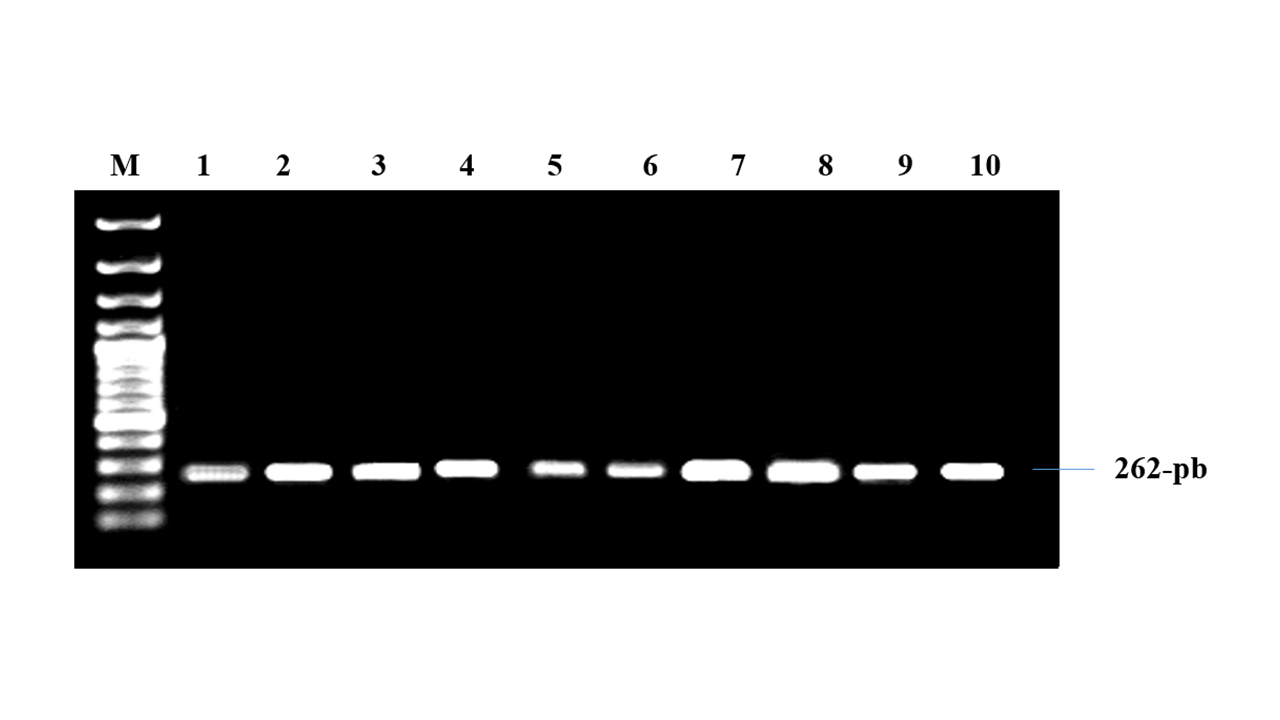
The objective of the study was to evaluate the occurrence of Salmonella spp. in 100 water samples, collected from five areas of the city of San José de Chimbo, prov. Bolivar. All the water samples were filtered using a suction ramp and membrane filters and then cultured using specific methods for the genus of interest and the isolates obtained were confirmed by microscopy and PCR (Polymerase Chain Reaction). After analyzes the pathogens were detected in 10% of the analyzed water samples. The highest number of contaminating samples was found in the sources of direct consumption, unlike the samples obtained directly from the slope that did not appear to be contaminated.
Downloads
References
N. Paudyal, V. Anihouvi, J. Hounhouigan, M.I. Matsheka, B. Sekwati-Monang, W. Amoa-Awua, A. Atter, N. Ackah, S. Mbugua, A. Asagbra, W. Abdelgadir, J. Nakavuma, M. Jakobsen y W. Fan, “Prevalence of foodborne pathogens in food from selected African countries a meta-analysis”. International Journal of Food Microbiology, 249, pp. 35–43, 2017.
F. Bayas-Morejón, A. Tigre, I. Aldaz, P. Parra, E. Ramos, R. Remache y C. Zamora, “Incidence of Salmonella spp. in Different Animal Species and Meat Products in Ecuador During the Period 2009-2019”, J Pure Appl Microbiol, vol. 13, no. 2, pp. 725-732, 2019. doi: 10.22207/JPAM.13.2.08
L.A. Andoh, S. Ahmed, J.E. Olsen, et al., “Prevalence and characterization of Salmonella among humans in Ghana”, Trop Med Health, vol. 45, no. 3, 2017. doi.org/10.1186/s41182-017-0043-z.
R.L.Lindsey, L. Garcia-Toledo, D. Fasulo, L.M. Gladney, y N. Strockbine, “Multiplex polymerase chain reaction for identification of Escherichia coli, Escherichia albertii and Escherichia fergusonii”, J. Microbiol. Methods, 140, pp. 1–4, 2017.
C.M. Cheng, W. Lin, K.T. Van, L. Phan, N.N. Tran, y D., Farmer, “Rapid detection of Salmonella in foods using real-time PCR”, J Food Prot, vol. 71, no. 12, 2008.
H. Liu, C. Whitehouse, y B. Li, “Presence and Persistence of Salmonella in Water: The Impact on Microbial Quality of Water and Food Safety”, Front Public Health, vol. 6, no. 159, 2018. doi: 10.3389/fpubh.2018.00159.
A. Kovacic, Z. Huljev, E. Susic, “Ground water as the source of an outbreak of Salmonella Enteritidis”, Journal of Epidemiology and Global Health, vol. 7, no. 3, pp. 181-184, 2017.
IS. Ekelozie, I. Ekejindu, O. Ochiabuto, M. Obi, U. Onwuasonya, y E., Obeagu, “Evaluation of Salmonella Species in Water Sources in Two Local Government Areas of Anambra State”, Cohesive J. Microbiol infect Dis, vol. 1, no. 1, CJMI.000501, 2018. DOI: 10.31031/CJMI.2018.01.000501.
A. Karkey, T. Jombart, A. Walker, C. Thompson, A. Torres, S. Dongol, N. Vu Thieu, D. Thanh, D. Thi Ngoc, P. Vinh, A. Singer, J. Parkhill, G. Thwaites, B. Basnyat, N. Ferguson, y S. Baker, “The Ecological Dynamics of Fecal Contamination and Salmonella Typhi and Salmonella Paratyphi A in Municipal Kathmandu Drinking Water”, PLoS Negl Trop Dis, vol. 10, no. 1, 2016. https://doi.org/10.1371/journal.pntd.0004346.
C. Hernández-Domínguez, AM. Hernández-Anguiano, C. Cháidez-Quiroz, G. Rendón-Sánchez y T. Suslow, “Detección de Salmonella y coliformes fecales en agua de uso agrícola para la producción de melón "Cantaloupe"”, Agricultura técnica en México, vol. 34, no. 1, pp. 75-84, 2008. https://doi.org/10.1016/j.jegh.2017.05.001
P. Shankar, J. Mishra, V. Bharti, D. Parashar, y S. Singh, “Multiplex PCR
assay for simultaneous detection and differentiation of Entamoeba histolytica, Giardia lamblia, and Salmonella spp. in the municipality-supplied drinking
water”, J Lab Physicians, vol. 11, pp. 275-80, 2019.
M. Bonyadian, H. Moshtaghi, y H. Nadi, “PCR detection of Vibrio cholerae, Escherichia coli, and Salmonella sp. from bottled drinking water in Iran”, J Infect Dev Ctries, vol. 12, no. 9, pp. 700-705, 2018. doi: 10.3855/jidc.10160. PMID: 31999626.
Published
How to Cite
Issue
Section
License
Copyright (c) 2021 Favian Bayas-Morejón, Sonia Salazar-Ramos, Katherin Beltrán, Luis Verdezoto

This work is licensed under a Creative Commons Attribution-NonCommercial-ShareAlike 4.0 International License.
Licensing Agreement
This journal provides free access to its content through its website following the principle that making research available free of charge to the public supports a larger exchange of global knowledge.
Web content of the journal is distributed under a Attribution-NonCommercial-ShareAlike 4.0 International.
Authors may adopt other non-exclusive license agreements for the distribution of the version of the published work, provided that the initial publication in this journal is indicated. Authors are allowed and recommended to disseminate their work through the internet before and during the submission process, which can produce interesting exchanges and increase citations of the published work.