Obtaining Starch from two Varieties of Taro: Colocasia esculenta L. and Xanthosoma sagittifolium L, through the Application of three Chemical Methods
DOI:
https://doi.org/10.18779/ingenio.v6i2.677Keywords:
malanga, starch, decantation, centrifugationAbstract
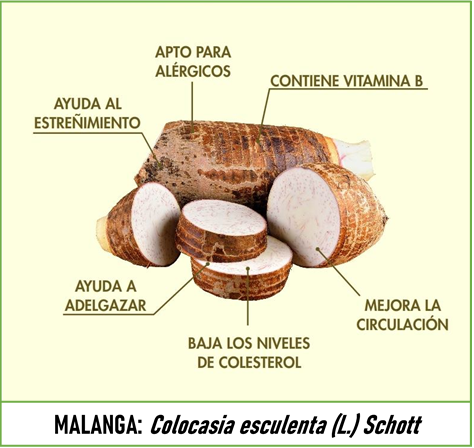
Taro (Colacasia esculenta L.), due to its accelerated vegetative development and easy propagation, has become one of the main crops in the tropical areas of Ecuador. Thanks to its biochemical properties and its high nutritional value, it has allowed the application of simple technologies to take advantage of this agricultural resource to obtain starch for use in different foods. The objective of this research was to obtain starch from two varieties of taro Colocasia esculenta L and Xanthosoma sagittifolium L, through the application of three chemical methods (citric acid, hydrochloric acid, phosphoric acid), in which a process of decantation and centrifugation. An ANOVA was applied, with a completely randomized block design using A*B*C factorial arrangement, obtaining a total of 12 treatments and 3 repetitions. The statistical differences between the means of the treatments were established with the Tukey test (P>0.05). A higher yield was obtained in the Malanga Blanca + Centrifugation + Citric Acid 29.34% treatment, in what corresponds to acidity and pH, the values were within those established by similar works, the highest fiber percentage was
presented in the purple Malanga treatment + Decantation + Phosphoric acid (0.68%), while the humidity is within the permitted parameters of the INEN 616, which indicates 14% and an optimal gelatinization temperature in the white Malanga treatment + Decantation + Phosphoric acid (56.53°C).
Downloads
References
Y. Figueroa Aguila, m. Milián Jimenez y Y. Rodriguez García, «Mejoramiento, conservación y diversidad genética de la malanga (Colocasia esculenta (L.) Schott.) en Cuba.,» Cultivos Tropicales, vol. 40, nº 2, pp. 1819-4087, 2019.
A. L. Pua , G. E. Barreto , J. L. Zuleta y O. D. Herrera, «Análisis de Nutrientes de la Raíz de la Malanga (Colocasia esculenta Schott) en el Trópico Seco de Colombia,» Información Tecnológica, vol. 30, nº 4, pp. 0718-0764, 2019.
A. L. Torres, P. M. Montero y L. C. Gonzales, «UTILIZACIÓN DE ALMIDÓN DE MALANGA (Colocasia esculenta L.) EN LA ELABORACIÓN DE SALCHICHAS TIPO FRANKFURT,» Biotecnología en el Sector Agropecuario y Agroindustrial, Vol. 12, No. 2, pp. 97-105, 2014.
J. Zapata Martinez y C. Velásquez Escandón , «Estudio de la Producción y Comercialización de la Malanga: Estrategias de incentivos para la producción en el país y consumo en la ciudad de Guayaquil [Tesis de Pregrado], » Guayaquil-Ecuador, 2013.
R. I. Narváez Narváez, S. N. Sánchez Llaguno y J. A. Neira Mosquera, « Obtención de Almidón de dos Variedades de Malanga: Colocasia esculenta l. y xanthosoma sagittifolium l, Mediante la Aplicación de tres Métodos Químicos, en la Zona de Santo Domingo de los Tsáchilas [Tesis de Pregrado],» Santo Domingo de los Tsáchilas- Ecuador, 2020.
J. Miranda, J. Rivadeneyra Rodriguez, E. Ramírez-Rivera , M. Juárez-Barrientos J , E. Herrera-Torres, R. Navarro Cortéz y B. Hernández Santos , «Caracterización fisicoquímica, funcional y contenido fenólico de harina de malanga (Colocasia esculenta) cultivada en la región de Tuxtepec, Oaxaca, México,» Ciencia y Mar, vol. 43, nº 2, pp. 37-47, 2011.
V. N. Zúñiga Bonilla, « EXTRACCIÓN Y ANÁLISIS COMPARATIVO DE LAS CARACTERÍSTICAS DEL ALMIDÓN DE MALANGA (Xanthosoma Saggitifolium), YUCA (Manihot Esculenta) Y PAPA CHINA (Colocasia Esculenta) [Tesis de Pregrado], » Riobamba-Ecuador, 2019.
J. K. Alarcón Moyano, « Industrialización de productos derivados de malanga (Xanthosoma sagittifolium) como alternativa de carbohidratos para el mercado de la ciudad de Quito [Tesis de Pregrado], » Quito-Ecduador, 2013.
A. Estrada , B. Perez, C. Sanchez , J. Soto, J. Jimenez y M. Vivar , «Enzymatic production of maltodextrins from taro (Colocasia esculenta) starch,» Journal of Foo, vol. 7, nº 3, pp. 233-241, 2019.
E. Marin B, R. Lemus M, V. Flores M y A. Vega G, «LA REHIDRATACIÓN DE ALIMENTOS DESHIDRATADOS,» Revista chilena de nutrición, vol. 33, nº 3, 2016.
A. Torres Rapelo, P. Montero Castillo y M. Duran Lengua, «Propiedades fisicoquímicas, morfológicas y funcionales del almidón de malanga (Colocasia esculenta)*,» Revista Lasallista de Investigación, vol. 10, nº 2, pp. 52-61, 2013.
M. Hernandez Medina, J. G. Torruco , L. Chel Guerrero y D. Betancur Ancona, «Caracterización fisicoquímica de almidones de tubérculos cultivados en Yucatán, México,» ISSN 0101-2061 Ciência e Tecnologia de Alimentos, vol. 28, nº 3, pp. 718-726, 2018.
FAO, «http://www.fao.org,» [En línea]. Disponible en: http://www.fao.org/tempref/docrep/fao/010/a1028s/a1028s03.pdf.
M. Torres Becerril, R. Carmona García y A. Aguirre Cruz, «Obtención y caracterización estructural y funcional de almidón acetilado de malanga (Colocasia esculenta Schott)*,» Revista Mexicana de Ciencias Agrícolas, vol. 6, nº 4, pp. 905-912, 2015.
L. V. Madrigal Ambriz, J. V. Hernández Madrigal, C. J. María Elena , M. d. l. C. Calvo Carrillo y C. R. Rosa de Guadalupe, «Caracterización física y nutricional de harina del tubérculo de “Malanga” Colocasia esculenta L. Schott) de Actopan, Veracruz, México,» Archivos Latinoamericanos de Nutrición, vol. 68, nº 2, 2018.
C. Granados, E. Guzman , D. Acevedo, M. Díaz y A. Herrera, «PROPIEDADES FUNCIONALES DEL ALMIDON DE SAGU (Maranta arundinacea),» Biotecnología en el Sector Agropecuario y Agroindustrial, vol. 12, nº 2, pp. 90-96, 2014.
Published
How to Cite
Issue
Section
License
Copyright (c) 2023 Sungey Naynee Sanchez Llaguno, Rosa Isabel Narvaez Narvaez, Juan Alejandro Neira Mosquera, Jhoan Alfredo Plua Montiel

This work is licensed under a Creative Commons Attribution-NonCommercial-ShareAlike 4.0 International License.
Licensing Agreement
This journal provides free access to its content through its website following the principle that making research available free of charge to the public supports a larger exchange of global knowledge.
Web content of the journal is distributed under a Attribution-NonCommercial-ShareAlike 4.0 International.
Authors may adopt other non-exclusive license agreements for the distribution of the version of the published work, provided that the initial publication in this journal is indicated. Authors are allowed and recommended to disseminate their work through the internet before and during the submission process, which can produce interesting exchanges and increase citations of the published work.