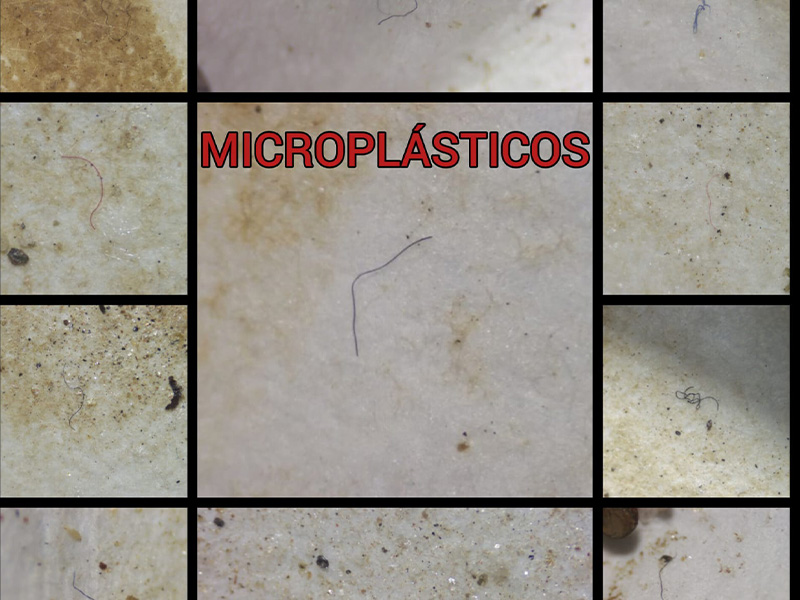
O IDENTIFICAÇÃO DE MICROPLÁSTICOS EM ÁGUAS E SEDIMENTOS DO RIO CASACAY, CANTÃO PASAJE, PROVÍNCIA DE EL ORO
DOI:
https://doi.org/10.18779/cyt.v19i2.1229Palavras-chave:
atividades humanas, água, poluição dos rios, fibras sintéticas, microplásticos, sedimentos.Resumo
no aplica
Downloads
Referências
Acosta-Coley, I., Duran-Izquierdo, M., Rodriguez-Cavallo, E., Mercado-Camargo, J., Mendez-Cuadro, D., y Olivero-Verbel, J. (2019). Quantification of microplastics along the Caribbean Coastline of Colombia: Pollution profile and biological effects on Caenorhabditis elegans. Marine Pollution Bulletin, 146, 574–583. https://doi.org/10.1016/J.MARPOLBUL.2019.06.084.
Bayo, J., Rojo, D., Olmos, S., y López, M. (2020). Microplastic pollution on the strandline of urban and natural city beaches: The role of local activities. International Journal of Environmental Impacts, 3(2), 155–167. https://doi.org/10.2495/EI-V3-N2-155-167.
Chi, S. C., Kang,Y. N., y Huang, Y. M. (2023).Efficacy and safety profile of intravitreal dexamethasone implant versus antivascular endothelial growth factor treatment in diabetic macular edema:a systematic review and meta-analysis. Scientific Reports, 13(1). https://doi.org/10.1038/s41598-023-34673-z.
Cole, M., Lindeque,P., Fileman, E., Halsband, C., Goodhead, R., Moger, J., y Galloway, T. S. (2013). Microplastic ingestion by zooplankton. Environmental Science and Technology, 47(12), 6646–6655. https://doi.org/10.1021/es400663f.
De-la-Torre, G. E.,Dioses-Salinas, D. C., Castro, J. M., Antay, R., Fernández, N. Y.,Espinoza-Morriberón, D., y Saldaña-Serrano, M. (2020). Abundance and distribution of microplastics on sandy beaches of Lima, Peru. Marine Pollution Bulletin, 151, 110877. https://doi.org/10.1016/J.MARPOLBUL.2019.110877.
Dick Vethaak, A., y Legler, J. (2021). Microplastics and human health: Knowledge gaps should be addressed to ascertain the health risks of microplastics. Science, 371(6530), 672–674. https://doi.org/10.1126/science.abe5041.
Fayshal, M. A. (2024).urrent practices of plastic waste management, environmental impacts, and potential alternatives for reducing pollution and improving management. Heliyon, 10(23), e40838. https://doi.org/10.1016/J.HELIYON.2024.E40838.
Fernandes, A. N., Bertoldi, C., Lara, L. Z., Stival, J., Alves, N. M., Cabrera, P. M., y Grassi, M. T. (2022). Microplastics in Latin America Ecosystems: A critical review of the current stage and research needs. Journal of the Brazilian Chemical Society, 33(4), 303–326. https://doi.org/10.21577/0103-5053.20220018.
Gao, S., Orlowski,N., Bopf, F. K., y Breuer, L. (2024). A review on microplastics in major European rivers. Wiley Interdisciplinary Reviews: Water, 11(3). https://doi.org/10.1002/wat2.1713.
González-Curbelo, M. Á., Cruz-Pérez, A., Gutiérrez-Bouzán, C., y López-Mesas, M. (2025).Assessing microplastic pollution along the Caribbean coast of La Guajira, Colombia. Marine Pollution Bulletin, 212, 117511. https://doi.org/10.1016/J.MARPOLBUL.2024.117511.
Jenner, L. C., Rotchell, J. M., Bennett, R. T., Cowen, M., Tentzeris, V., y Sadofsky, L. R. (2022). Detection of microplastics in human lung tissue using uFTIR spectroscopy.Science of The Total Environment, 831, 154907. https://doi.org/10.1016/J.SCITOTENV.2022.154907.
Jin, X., Li, Z., Peñuelas,J., Sardan, J., Wu, Q.,Peng, Y., Hedenec,P., Li, Z., Yuan, C., Yuan, J., Chen, Z., Zhao, Z., Wu, F., y Yue, K. (2025). Quantitative assessment on the distribution patterns of microplastics in global inland waters. Communications Earth and Environment, 6(1). https://doi.org/10.1038/s43247-025-02320-2.
Kumkar, P., Gosavi, S. M., Verma, C. R., Pise, M., y Kalous, L. (2021). Big eyes can’t see microplastics: Feeding selectivity and eco-morphological adaptations in oral cavity affect microplastic uptake in mud-dwelling amphibious mudskipper fish. Science of The Total Environment, 786, 147445. https://doi.org/10.1016/J.SCITOTENV.2021.147445.
Kushwaha, M., Shankar, S., Goel, D.,Singh, S., Rahul, J., Rachna, K., y Singh, J. (2024). Microplastics pollution in the marine environment: A review of sources, impacts and mitigation. Marine Pollution Bulletin, 209, 117109. https://doi.org/10.1016/J.MARPOLBUL.2024.117109.
Kye, H., Kim, J., Ju, S., Lee, J., Lim, C., y Yoon, Y. (2023). Microplastics in water systems:A review of their impacts on the environment and their potential hazards. Heliyon, 9(3). https://doi.org/10.1016/j.heliyon.2023.e14359.
León, D., y Serrano, L.(2019). Protocolo para la planificación, muestreo, análisis de identificación de microplásticos en ríos. https://hombreyterritorio.org/protocolo-de-muestreo-e-identificacion-de-microplasticos/?utm_source=.
Lillo, P. M., Udagedara, S., Williamson, R., y Gorman, D. (2025). Cross-shore microplastic accumulation on Sri Lanka’s west coast one year after the Catastrophic x-press pearl pollution event. Microplastics, 4(3), 37. https://doi.org/10.3390/microplastics4030037
Maskrey, A. (1993). Los Desastres No Son Naturales.https://goo.su/B5Crzw.
Meijer, L. J. J., Van Emmerik,T., Van Der Ent, R., Schmidt, C., y Lebreton, L. (2021).More than 1000 rivers account for 80% of global riverine plastic emissions into the ocean. Sci. Adv, 7(18). https://doi.org/10.1126/sciadv.aaz5803.
Piskula, P.,y Astel, A. M. (2022). Microplastics occurrence in two mountainous rivers in the lowland area—a case study of the Central Pomeranian Region, Poland. Microplastics, 1(1), 167–185. https://doi.org/10.3390/microplastics1010011.
Rahav, E., Belkin, N., Nnebuo,O., Sisma-Ventura, G., Guy-Haim, T., Sharon-Gojman, R.,Geisler, E., y Bar-Zeev, E. (2022). Jellyfish swarm impair the pretreatment efficiency and membrane performance of seawater reverse osmosis desalination. Water Research, 215, 118231. https://doi.org/10.1016/J.WATRES.2022.118231.
Rico, A., Redondo-Hasselerharm, P. E., Vighi, M., Waichman, A. V., Nunes, G. S. de S., de Oliveira, R., Singdahl-Larsen, C., Hurley, R., Nizzetto, L., y Schell, T. (2023). Large-scale monitoring and risk assessment of microplastics in the Amazon River. Water Research, 232. https://doi.org/10.1016/j.watres.2023.119707.
Stapleton, M. J., y Hai, F. I.(2023). Microplastics as an emerging contaminant of concern to our environment: a brief overview of the sources and implications. Bioengineered, 14(1), 2244754. https://doi.org/10.1080/21655979.2023.2244754.
Turner, A., Wallerstein,C., y Arnold, R. (2019).Identification, origin and characteristics of bio-bead microplastics from beaches in western Europe. Science of the Total Environment, 664, 938–947. https://doi.org/10.1016/j.scitotenv.2019.01.281.
Vandermeersch, G., Van Cauwenberghe,L., Janssen, C. R., Marques, A., Granby, K., Fait, G., Kotterman, M. J. J., Diogène, J., Bekaert, K., Robbens, J., y Devriese, L. (2015). A critical view on microplastic quantification in aquatic organisms. Environmental Research, 143, 46–55. https://doi.org/10.1016/J.ENVRES.2015.07.016.
Wu, Z., Wang, J.,Yu, S., Sun, Q., y Han, Y. (2025).Microplastic pollution in China’s aquatic systems: Spatial distribution, transport pathways, and controlling strategies. Microplastics, 4(3), 41. https://doi.org/10.3390/microplastics4030041.
Yakovlev, E., y Puchkov, A. (2020).Assessment of current natural and anthropogenic radionuclide activity concentrations in the bottom sediments from the Barents Sea. Marine Pollution Bulletin, 160, 111571. https://doi.org/10.1016/J.MARPOLBUL.2020.111571.
Publicado
Como Citar
Edição
Seção
Licença
Copyright (c) 2026 Alex Dumany Luna Florin, Gabriela Mishel Jimenez Cueva, Fanny Daniela Godoy Yunga, Juan Gabriel Paredes Moran

Este trabalho está licenciado sob uma licença Creative Commons Attribution-NonCommercial-ShareAlike 4.0 International License.
Contrato de Licenciamento
Este jornal oferece acesso gratuito ao seu conteúdo por meio de seu site, seguindo o princípio de que disponibilizar pesquisas gratuitamente ao público promove uma grande mudança no conhecimento global.
O conteúdo do site do jornal é distribuído sob a licença Atribuição-NãoComercial-CompartilhaIgual 4.0 Internacional.
Os autores podem adotar outros acordos de licenciamento não exclusivos para a distribuição da versão publicada de seu trabalho, desde que a publicação inicial seja indicada neste periódico. É permitido e recomendado que os autores divulguem seus trabalhos na Internet antes e durante o processo de submissão, ou que possam gerar mudanças interessantes e aumentar as citações dos trabalhos publicados.