Identification of microplastics in water and sediments of the Casacay river, Pasaje canton, El Oro province
DOI:
https://doi.org/10.18779/cyt.v19i2.1229Keywords:
human activities, bioaccumulation, river pollution, synthetic fiber, pollution, synthetic polymersAbstract
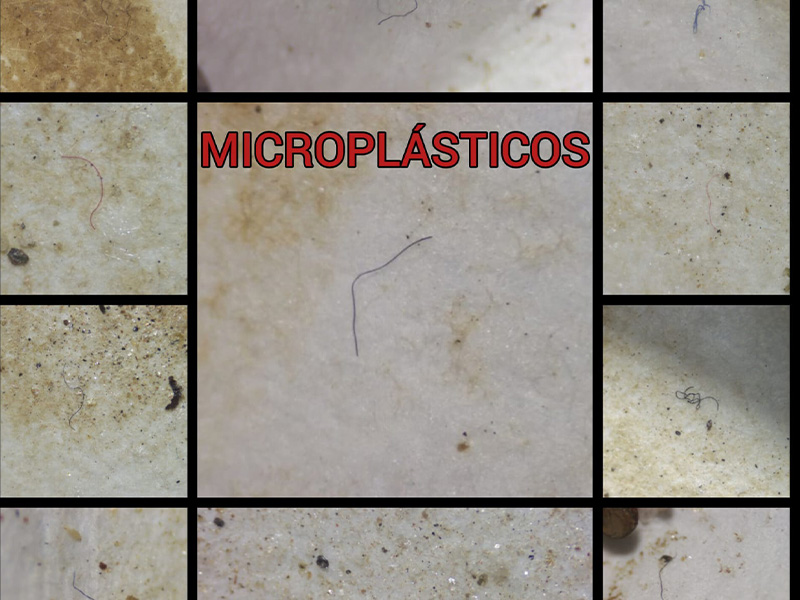
Microplastics pollution in freshwater has posed a serious threat to aquatic environment. This study investigated the presence of microplastics in water and sediments of the Casacay River micro-basin to assess aquatic pollution. Representative samples were selected from four zones: natural, agriculture, tourist, and urban, with four replicates at each sampling point. Samples were collected during the rainy season in 2025. The methodology employed included water filtration and microplastic extraction from sediments using saline solution. The results showed a higher concentration of microplastics in urban and tourist areas, particularly fibers, whit human activities significantly influencing this concentration. This study demonstrated that sediments act as reservoirs for microplastics, with fibers predominating and up to 75 units found in sediment samples. In contrast, water samples showed a higher quantity of microplastics, with up to 100 units found.
Downloads
References
Acosta-Coley, I., Duran-Izquierdo, M., Rodriguez-Cavallo, E., Mercado-Camargo, J., Mendez-Cuadro, D., y Olivero-Verbel, J. (2019). Quantification of microplastics along the Caribbean Coastline of Colombia: Pollution profile and biological effects on Caenorhabditis elegans. Marine Pollution Bulletin, 146, 574–583. https://doi.org/10.1016/J.MARPOLBUL.2019.06.084.
Bayo, J., Rojo, D., Olmos, S., y López, M. (2020). Microplastic pollution on the strandline of urban and natural city beaches: The role of local activities. International Journal of Environmental Impacts, 3(2), 155–167. https://doi.org/10.2495/EI-V3-N2-155-167.
Chi, S. C., Kang,Y. N., y Huang, Y. M. (2023).Efficacy and safety profile of intravitreal dexamethasone implant versus antivascular endothelial growth factor treatment in diabetic macular edema:a systematic review and meta-analysis. Scientific Reports, 13(1). https://doi.org/10.1038/s41598-023-34673-z.
Cole, M., Lindeque,P., Fileman, E., Halsband, C., Goodhead, R., Moger, J., y Galloway, T. S. (2013). Microplastic ingestion by zooplankton. Environmental Science and Technology, 47(12), 6646–6655. https://doi.org/10.1021/es400663f.
De-la-Torre, G. E.,Dioses-Salinas, D. C., Castro, J. M., Antay, R., Fernández, N. Y.,Espinoza-Morriberón, D., y Saldaña-Serrano, M. (2020). Abundance and distribution of microplastics on sandy beaches of Lima, Peru. Marine Pollution Bulletin, 151, 110877. https://doi.org/10.1016/J.MARPOLBUL.2019.110877.
Dick Vethaak, A., y Legler, J. (2021). Microplastics and human health: Knowledge gaps should be addressed to ascertain the health risks of microplastics. Science, 371(6530), 672–674. https://doi.org/10.1126/science.abe5041.
Fayshal, M. A. (2024).urrent practices of plastic waste management, environmental impacts, and potential alternatives for reducing pollution and improving management. Heliyon, 10(23), e40838. https://doi.org/10.1016/J.HELIYON.2024.E40838.
Fernandes, A. N., Bertoldi, C., Lara, L. Z., Stival, J., Alves, N. M., Cabrera, P. M., y Grassi, M. T. (2022). Microplastics in Latin America Ecosystems: A critical review of the current stage and research needs. Journal of the Brazilian Chemical Society, 33(4), 303–326. https://doi.org/10.21577/0103-5053.20220018.
Gao, S., Orlowski,N., Bopf, F. K., y Breuer, L. (2024). A review on microplastics in major European rivers. Wiley Interdisciplinary Reviews: Water, 11(3). https://doi.org/10.1002/wat2.1713.
González-Curbelo, M. Á., Cruz-Pérez, A., Gutiérrez-Bouzán, C., y López-Mesas, M. (2025).Assessing microplastic pollution along the Caribbean coast of La Guajira, Colombia. Marine Pollution Bulletin, 212, 117511. https://doi.org/10.1016/J.MARPOLBUL.2024.117511.
Jenner, L. C., Rotchell, J. M., Bennett, R. T., Cowen, M., Tentzeris, V., y Sadofsky, L. R. (2022). Detection of microplastics in human lung tissue using uFTIR spectroscopy.Science of The Total Environment, 831, 154907. https://doi.org/10.1016/J.SCITOTENV.2022.154907.
Jin, X., Li, Z., Peñuelas,J., Sardan, J., Wu, Q.,Peng, Y., Hedenec,P., Li, Z., Yuan, C., Yuan, J., Chen, Z., Zhao, Z., Wu, F., y Yue, K. (2025). Quantitative assessment on the distribution patterns of microplastics in global inland waters. Communications Earth and Environment, 6(1). https://doi.org/10.1038/s43247-025-02320-2.
Kumkar, P., Gosavi, S. M., Verma, C. R., Pise, M., y Kalous, L. (2021). Big eyes can’t see microplastics: Feeding selectivity and eco-morphological adaptations in oral cavity affect microplastic uptake in mud-dwelling amphibious mudskipper fish. Science of The Total Environment, 786, 147445. https://doi.org/10.1016/J.SCITOTENV.2021.147445.
Kushwaha, M., Shankar, S., Goel, D.,Singh, S., Rahul, J., Rachna, K., y Singh, J. (2024). Microplastics pollution in the marine environment: A review of sources, impacts and mitigation. Marine Pollution Bulletin, 209, 117109. https://doi.org/10.1016/J.MARPOLBUL.2024.117109.
Kye, H., Kim, J., Ju, S., Lee, J., Lim, C., y Yoon, Y. (2023). Microplastics in water systems:A review of their impacts on the environment and their potential hazards. Heliyon, 9(3). https://doi.org/10.1016/j.heliyon.2023.e14359.
León, D., y Serrano, L.(2019). Protocolo para la planificación, muestreo, análisis de identificación de microplásticos en ríos. https://hombreyterritorio.org/protocolo-de-muestreo-e-identificacion-de-microplasticos/?utm_source=.
Lillo, P. M., Udagedara, S., Williamson, R., y Gorman, D. (2025). Cross-shore microplastic accumulation on Sri Lanka’s west coast one year after the Catastrophic x-press pearl pollution event. Microplastics, 4(3), 37. https://doi.org/10.3390/microplastics4030037
Maskrey, A. (1993). Los Desastres No Son Naturales.https://goo.su/B5Crzw.
Meijer, L. J. J., Van Emmerik,T., Van Der Ent, R., Schmidt, C., y Lebreton, L. (2021).More than 1000 rivers account for 80% of global riverine plastic emissions into the ocean. Sci. Adv, 7(18). https://doi.org/10.1126/sciadv.aaz5803.
Piskula, P.,y Astel, A. M. (2022). Microplastics occurrence in two mountainous rivers in the lowland area—a case study of the Central Pomeranian Region, Poland. Microplastics, 1(1), 167–185. https://doi.org/10.3390/microplastics1010011.
Rahav, E., Belkin, N., Nnebuo,O., Sisma-Ventura, G., Guy-Haim, T., Sharon-Gojman, R.,Geisler, E., y Bar-Zeev, E. (2022). Jellyfish swarm impair the pretreatment efficiency and membrane performance of seawater reverse osmosis desalination. Water Research, 215, 118231. https://doi.org/10.1016/J.WATRES.2022.118231.
Rico, A., Redondo-Hasselerharm, P. E., Vighi, M., Waichman, A. V., Nunes, G. S. de S., de Oliveira, R., Singdahl-Larsen, C., Hurley, R., Nizzetto, L., y Schell, T. (2023). Large-scale monitoring and risk assessment of microplastics in the Amazon River. Water Research, 232. https://doi.org/10.1016/j.watres.2023.119707.
Stapleton, M. J., y Hai, F. I.(2023). Microplastics as an emerging contaminant of concern to our environment: a brief overview of the sources and implications. Bioengineered, 14(1), 2244754. https://doi.org/10.1080/21655979.2023.2244754.
Turner, A., Wallerstein,C., y Arnold, R. (2019).Identification, origin and characteristics of bio-bead microplastics from beaches in western Europe. Science of the Total Environment, 664, 938–947. https://doi.org/10.1016/j.scitotenv.2019.01.281.
Vandermeersch, G., Van Cauwenberghe,L., Janssen, C. R., Marques, A., Granby, K., Fait, G., Kotterman, M. J. J., Diogène, J., Bekaert, K., Robbens, J., y Devriese, L. (2015). A critical view on microplastic quantification in aquatic organisms. Environmental Research, 143, 46–55. https://doi.org/10.1016/J.ENVRES.2015.07.016.
Wu, Z., Wang, J.,Yu, S., Sun, Q., y Han, Y. (2025).Microplastic pollution in China’s aquatic systems: Spatial distribution, transport pathways, and controlling strategies. Microplastics, 4(3), 41. https://doi.org/10.3390/microplastics4030041.
Yakovlev, E., y Puchkov, A. (2020).Assessment of current natural and anthropogenic radionuclide activity concentrations in the bottom sediments from the Barents Sea. Marine Pollution Bulletin, 160, 111571. https://doi.org/10.1016/J.MARPOLBUL.2020.111571.
Published
How to Cite
Issue
Section
License
Copyright (c) 2026 Alex Dumany Luna Florin, Gabriela Mishel Jimenez Cueva, Fanny Daniela Godoy Yunga, Juan Gabriel Paredes Moran

This work is licensed under a Creative Commons Attribution-NonCommercial-ShareAlike 4.0 International License.
Licensing Agreement
This journal provides free access to its content through its website following the principle that making research available free of charge to the public supports a larger exchange of global knowledge.
Web content of the journal is distributed under a Attribution-NonCommercial-ShareAlike 4.0 International.
Authors may adopt other non-exclusive license agreements for the distribution of the version of the published work, provided that the initial publication in this journal is indicated. Authors are allowed and recommended to disseminate their work through the internet before and during the submission process, which can produce interesting exchanges and increase citations of the published work.