Diversidad florística en plantaciones de Tectona grandis L. f. de diferentes edades
DOI:
https://doi.org/10.18779/cyt.v19i1.968Palabras clave:
carbono, conservación, especies, nutrientes, sostenibilidadResumen
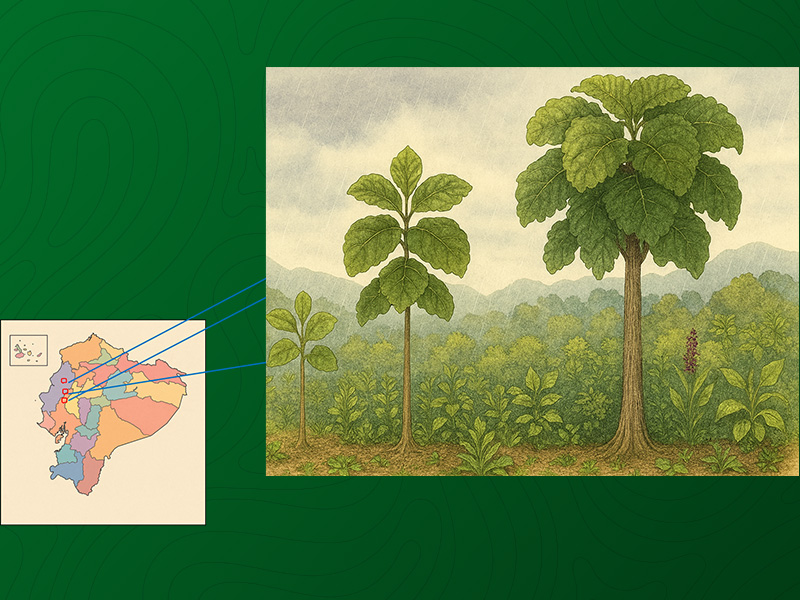
La agroforestería se consolida como un sistema de producción sostenible que promueve el secuestro de carbono y el ciclaje eficiente de nutrientes, destacándose entre sus beneficios ecológicos el incremento de la diversidad vegetal, factor clave para el mantenimiento de la salud de los ecosistemas. Este estudio tuvo como objetivo evaluar la diversidad florística en plantaciones de Tectona grandis (teca) con edades comprendidas entre 2 y 18 años, durante la época lluviosa, en los cantones de Pichincha, Palenque y Balzar (Ecuador). Para ello, se aplicaron los índices de similitud de Jaccard, así como los índices de diversidad de Shannon-Wiener y Simpson. Los resultados del índice de Shannon-Wiener revelaron una alta diversidad en las localidades de La Colina, La Párraga, Cerro Verde, La Reserva y San Agustín, mientras que el índice de Simpson indicó una diversidad moderada en La Reserva, Cerro Verde, La Párraga, La Colina, San Agustín y Río Grande-Pichincha. El incremento progresivo de la diversidad vegetal observado en las plantaciones sugiere una mejora significativa en la funcionalidad y resiliencia del ecosistema, reforzando el potencial de los sistemas agroforestales como estrategia de manejo sostenible.
Descargas
Citas
Acosta, V., Araujo, P., y Iturre, M. (2006). Caracteres estructurales de las masas (Serie Didactica No. 22) Universidad Nacional de Santiago del Estero, Facultad de Ciencias Forestales. https://fcf.unse.edu.ar/archivos/series-didacticas/SD-22-Caracteres-estructurales-ACOSTA.pdf
Amoah-Antwi, C., Kwiatkowska-Malina, J. Thornton, S. F., Fenton, O., Malina, G., y Szara, E. (2020). Restoration of soil quality using biochar and brown coal waste: A review. The Science of the Total Environment, 722, 137852. https://doi.org/10.1016/j.scitotenv.2020.137852
Ampoorter, E., Barbaro, L., Jactel, H., Baeten, L., Boberg, J., Carnol, M., Castagneyrol, B., Charbonnier, Y., Dawud, S. M., Deconchat, M., De Smedt, P., De Wandeler, H., Guyot, V., Hättenschwiler, S., Joly, F.-X., Koricheva, J., Milligan, H., Muys, B., Nguyen, D., … Allan, E. (2020). Tree diversity is key for promoting the diversity and abundance of forest-associated taxa in Europe. Oikos, 129(2), 133–146. https://doi.org/10.1111/oik.06290
Arora, S., y Dagar, J. C. (2019). Salinity tolerance indicators. En Dagar, J., Yadav, R., Sharma, P. (eds) Research Developments in Saline Agriculture (pp. 155–201). Springer Singapore. https://doi.org/10.1007/978-981-13-5832-6_5
Asare, A., Asante, W. A., Owusu-Prempeh, N., Opuni Frimpong, E., y Adusu, D. (2020). Comparative analysis of understorey floristic diversity and carbon stocks in poorly and intensively managed Tectona grandis plantations. International Journal of Forestry Research, 2020, 1-13. https://doi.org/10.1155/2020/8868824
Campo, A. M., y Duval, V. S. (2014). Diversidad y valor de importancia para la conservación de la vegetación natural. Parque Nacional Lihué Calel (Argentina). Anales de Geografía de la Universidad Complutense, 34(2), 25-42. https://doi.org/10.5209/rev_AGUC.2014.v34.n2.47071
Chettri, R., Tamang, M., Sarkar, B. Ch., Shukla, G., Vineeta., Debnath, M. K., Nath, A. J., Bhat, J. A., y Chakravarty, S. (2023). Species richness, stand structure and carbon storage under an age chronosequence in Tectona grandis plantation at agricultural landscape of Indian Eastern Himalayan Foothill. Tropical Ecology, 64(4), 681-697. https://doi.org/10.1007/s42965-023-00295-9
Corona, P., Chirici, G., McRoberts, R. E., Winter, S., y Barbati, A. (2011). Contribution of large-scale forest inventories to biodiversity assessment and monitoring. Forest ecology and Management, 262(11), 2061-2069. https://doi.org/10.1016/j.foreco.2011.08.044
Delgado Gualmatan, W. L., Navia Estrada, J. F., y Lagos Burbano, T. C. (2020). Caracterización de especies arbóreas asociadas al cultivo de café (Coffea arabica L.) en el sur de Colombia. Revista Facultad de Ciencias Agropecuarias-FAGROPEC, 12(2), 210-219. https://doi.org/10.47847/fagropec.v12n2a4
Feng, Y., Schmid, B., Loreau, M., Forrester, D. I., Fei, S., Zhu, J., Tang, Z., Zhu, J., Hong, P., Ji, C., Shi, Y., Su, H., Xiong, X., Xiao, J., Wang, S., y Fang, J. (2022). Multispecies forest plantations outyield monocultures across a broad range of conditions. Science, 376(6595), 865-868. https://doi.org/10.1126/science.abm6363
García Cespedes, D., Barberán-Valencia, R., Lajones-Bone, D. A., y Lima Cazorla, L. A. (2024). Los jardines botánicos como alternativa para la conservación de especies forestales maderables. “Jardín Tropical Mútile”. Revista UTCiencia, 11(3), 83-111. https://doi.org/10.61236/utciencia.v11i3.639
Guo, Y., Xu, T., Cheng, J., Wei, G., y Lin, Y. (2021). Above-and belowground biodiversity drives soil multifunctionality along a long-term grassland restoration chronosequence. Science of the Total Environment, 772, 145010. https://doi.org/10.1016/j.scitotenv.2021.145010
Gupta, V. P. (2020). Role of agroforestry in soil conservation and soil health management: A review. Journal of Pharmacognosy and Phytochemistry, 9(4), 555-558. https://www.phytojournal.com/archives/2020/vol9issue4S/PartI/S-9-4-75-690.pdf
Hammer, O., Harper, D., y Ryan, P. (2001). Past: paleontological statistics software package for educaton and data anlysis. Palaeontologia Electronica, 4(1), 1-9. https://palaeo-electronica.org/2001_1/past/past.pdf
Herrera, A. M., Riera, R., y Rodríguez, R. A. (2023). Alpha species diversity measured by Shannon’s H-index: Some misunderstandings and underexplored traits, and its key role in exploring the trophodynamic stability of dynamic multiscapes. Ecological Indicators, 156, 111118. https://doi.org/10.1016/j.ecolind.2023.111118
Hnykin, A. S. y Ivantsova, E. A. (2021). Biological diversity of the spiders herpetobiont population of degraded biotopes in Volgograd City and its surroundings. Bulletin of Nizhnevartovsk State University, (2), 63-69. https://doi.org/10.36906/2311-4444/21-2/08
Hou, L., Zhang, Y., Li, Z., Shao, G., Song, L., y Sun, Q. (2021). Comparison of soil properties, understory vegetation species diversities and soil microbial diversities between Chinese fir plantation and close-to-natural forest. Forests, 12(5), 632. https://doi.org/10.3390/f12050632
Ikhajiagbe, B., Ogwu, M. C., y Lawrence, A. E. (2020). Single-tree influence of Tectona grandis Linn. f. on plant distribution and soil characteristics in a planted forest. Bulletin of the National Research Centre, 44, 29. https://doi.org/10.1186/s42269-020-00285-0
Jaccard, P. (1908). Nouvelles recherches sur la distribution florale. Bull. Soc. Vaud. Sci. Nat., 44, 223-270. https://doi.org/10.5169/seals-268384
Kaushal, R., Mandal, D., Panwar, P., Rajkumar, Kumar, P., Tomar, J. M. S., y Mehta, H. (2021). Chapter 20 - Soil and water conservation benefits of agroforestry. En Shit, P. K., Pourghasemi H. R., Adhikary, P. P., Bhunia, G. S. y Sati, V. P., Forest Resources Resilience and Conflicts (pp. 259-275). Elsevier. https://doi.org/10.1016/B978-0-12-822931-6.00020-4
Khatoon, Z., Huang, S., Rafique, M., Fakhar, A., Kamran, M. A., y Santoyo, G. (2020). Unlocking the potential of plant growth-promoting rhizobacteria on soil health and the sustainability of agricultural systems. Journal of Environmental Management, 273, 111118. https://doi.org/10.1016/j.jenvman.2020.111118
Kijowska-Oberc, J., Staszak, A. M., Kaminski, J., y Ratajczak, E. (2020). Adaptation of forest trees to rapidly changing climate. Forests, 11(2), 123. https://doi.org/10.3390/f11020123
Kitikidou, K., Milios, E., Stampoulidis, A., Pipinis, E., y Radoglou, K. (2024). Using biodiversity indices effectively: Considerations for forest management. Ecologies, 5(1), 42-51. https://doi.org/10.3390/ecologies5010003
Kuyah, S., Sileshi, G. W., Luedeling, E., Akinnifesi, F. K., Whitney, C. W., Bayala, J., Kuntashula, E., Dimobe, K., y Mafongoya, P. L. (2020). Potential of agroforestry to enhance livelihood security in Africa. En Dagar, J.C., Gupta, S.R., y Teketay, D. (eds) Agroforestry for Degraded Landscapes (pp. 135–167). Springer Singapore. https://doi.org/10.1007/978-981-15-4136-0_4
Lazicki, P., Mazza Rodrigues, J. L., y Geisseler, D. (2021). Sensitivity and variability of soil health indicators in a California cropping system. Soil Science Society of America Journal, 85(5), 1827-1842. https://doi.org/10.1002/saj2.20278
Lehman, R. M., Cambardella, C. A., Stott, D. E., Acosta-Martínez, V., Manter, D. K., Buyer, J. S., Maul, J. E., Smith, J. L., Collins, H. P., Halvorson, J. J., Kremer, R. J., Lundgren, J. G., Ducey, T. F., Jin, V. L., y Karlen, D. L. (2015). Understanding and enhancing soil biological health: The solution for reversing soil degradation. Sustainability, 7(1), 988-1027. https://doi.org/10.3390/su7010988
Li, C., Wang, B., Fang, Z., Yu, H., y Huang, J. (2022). Plant species diversity is driven by soil base cations under acid deposition in desert coal-mining region in northwestern China. Ecological Indicators, 145, 109682. https://doi.org/10.1016/j.ecolind.2022.109682
López Torres, J. L., Santos Castillo, R. A., y Aguirre Hernández, E. (2001). Inventario de regeneración natural en áreas de aprovechamientos forestales. Decima cuarta reunión científica - tecnológica forestal y agropecuaria, Veracruz, México. https://www.oocities.org/rcveracruz2002/Forestales/FoEx/FoEx01C.pdf
Mofokeng, M. M., Weepener, H. L., Araya, H. T., Amoo, S. O., Araya, N. A., Hlophe-Ginindza, S., y du Plooy, C. P. (2024). Environmental Suitability Predictions for the Distribution and Potential Cultivation of Artemisia afra in South Africa. International Journal of Plant Biology, 15(4), 1321-1337. https://doi.org/10.3390/ijpb15040091
Mora-Donjuán, C. A., Rubio-Camacho, E. A., Alanís-Rodríguez, E., Jiménez-Pérez, J., González-Tagle, M. A., Mata-Balderas, J. M., y Mora-Olivo, A. (2014). Composición y diversidad vegetal de un área de matorral desértico micrófilo con historial pecuario en el noreste de México. Polibotánica, 38, 53-66. https://www.redalyc.org/pdf/621/62131503003.pdf
Obiahu, O. H., Kalu, A. I., y Uchechukwu, N. (2020). Effect of Tectona grandis biochar on soil quality enhancement and yield of cucumber (Cucumis Sativus L) in highlyweathered nitisol, Southeastern Nigeria. Journal of Wastes and Biomass Management (JWBM), 2(2), 41-48. https://doi.org/10.26480/jwbm.02.2020.41.48
Omomoh, B. E., Adekunle, V. A. J., Aigbe, P. D., Ademoh, F. O., y Omomoh, B. M. (2020). Evaluation of soil seed bank-vegetation and regeneration potential of Tectona grandis L. f. plantation (Taungya farm) in Akure forest reserve, Ondo State, Nigeria. Tropical Plant Research, 7(1), 37-45. https://doi.org/10.22271/tpr.2020.v7.i1.006
Panwar, P., Mahalingappa, D. G., Kaushal, R., Bhardwaj, D. R., Chakravarty, S., Shukla, G., Thakur, N. S., Chavan, S. B., Pal, S., Nayak, B. G., Srinivasaiah, H. T., Dharmaraj, R., Veerabhadraswamy, N., Apshahana, K., Suresh, C. P., Kumar, D., Sharma, P., Kakade, V., Nagaraja, M. S., ... y Gurung, T. (2022). Biomass production and carbon sequestration potential of different agroforestry systems in India: A critical review. Forests, 13(8), 1274. https://doi.org/10.3390/f13081274
Pigot, A. L., Merow, C., Wilson, A., y Trisos, C. H. (2023). Abrupt expansion of climate change risks for species globally. Nature Ecology y Evolution, 7(7), 1060–1071. https://www.nature.com/articles/s41559-023-02070-4
Pulido-Salas, M. T., Ordóñez Díaz, M. de J., y Cálix de Dios, H. (2017). Flora, usos y algunas causales de cambio en quince huertos familiares en el municipio de José María Morelos, Quintana Roo, México. Península, 12(1), 119-145. https://doi.org/10.1016/j.pnsla.2017.01.006
Renté Martí, O., Reyes, P. P., Corrales Vila, Y., Cuevas Rodríguez, M., y Nápoles García, M. C. (2020). Efecto de Canavalia ensiformis (L.) en propiedades físicas de un suelo fluvisol diferenciado en Santiago de Cuba. Cultivos Tropicales, 3(6), 65–75. https://doi.org/10.34069/RA/2020.6.05
Rodríguez Solís, A., Badilla Valverde, Y., y Moya, R. (2021). Agronomic effects of Tectona grandis biochar from wood residues on the growth of young Cedrela odorata plants in a nursery. Agronomy, 11(10), 2079. https://doi.org/10.3390/agronomy11102079
Roswell, M., Dushoff, J., y Winfree, R. (2021). A conceptual guide to measuring species diversity. Oikos, 130(3), 321-338. https://doi.org/10.1111/oik.07202
Shin, S., Soe, K. T., Lee, H., Kim, T. H., Lee, S., y Park, M. S. (2020). A systematic map of agroforestry research focusing on ecosystem services in the Asia-Pacific Region. Forests, 11(4), 368. https://doi.org/10.3390/f11040368
Soubry, I., Doan, T., Chu, T., y Guo, X. (2021). A systematic review on the integration of remote sensing and GIS to forest and grassland ecosystem health attributes, indicators, and measures. Remote Sensing, 13(16), 3262. https://doi.org/10.3390/rs13163262
Sun, C., Chai, Z., Liu, G., y Xue, S. (2017). Changes in species diversity patterns and spatial heterogeneity during the secondary succession of grassland vegetation on the Loess Plateau, China. Frontiers in Plant Science, 8, 1465. https://doi.org/10.3389/fpls.2017.01465
Tamang, M., Chettri, R., Vineeta, Shukla, G., Bhat, J. A., Kumar, A., Kumar, M., Suryawanshi, A., Cabral-Pinto, M., y Chakravarty, S. (2021). Stand structure, biomass and carbon storage in Gmelina arborea plantation at agricultural landscape in foothills of Eastern Himalayas. Land, 10(4), 387. https://doi.org/10.3390/land10040387
Toppo, P., Oraon, P. R., Singh, B. K., y Kumar, A. (2021). Biomass, productivity and carbon sequestration of Tectona grandis and Gmelina arborea-based silvipastoral system. Current Science, 121(12), 1594-1599. https://doi.org/10.18520/cs/v121/i12/1594-1599
Udayana, C., Andreassen, H. P., y Skarpe, C. (2020). Understory diversity and composition after planting of teak and mahogany in Yogyakarta, Indonesia. Journal of Sustainable Forestry, 39(5), 494-510. https://doi.org/10.1080/10549811.2019.1686029
Visscher, A. M., Meli, P., Fonte, S. J., Bonari, G., Zerbe, S., y Wellstein, C. (2024). Agroforestry enhances biological activity, diversity and soil-based ecosystem functions in mountain agroecosystems of Latin America: A meta-analysis. Global change Biology, 30(1), e17036. https://doi.org/10.1111/gcb.17036
Vroh, B., Kone, Y., y Djongmo, V. (2022). Plant species diversity and structure in tree plantations at Téné Protected Forest (Cote d’Ivoire). Annals of Silvicultural Research, 47(1), 39-47. https://dx.doi.org/10.12899/asr-2342
Wang, Z., Ning, X., y Blaschko, M. B. (2023). Jaccard Metric Losses: Optimizing the Jaccard Index with Soft Labels. 37th Conference on Neural Information Processing Systems. https://doi.org/10.48550/arXiv.2302.05666
Willis, A. D., y Martin, B. D. (2022). Estimating diversity in networked ecological communities. Biostatistics, 23(1), 207-222. https://doi.org/10.1093/biostatistics/kxaa015
Winkel, G., Lovric, M., Muys, B. Katila, P., Lundhede, T., Pecurul, M., Pettenella, D., Pipart, N., Plieninger, T., Prokofieva, I., Parra, C., Pulzl, H., Roitsch, D., Roux, J.-L., Thorsen, B. J., Tyrvainen, L., Torralba, M., Vacik, H., Weiss, G., y Wunder, S. (2015). Governing Europe's forests for multiple ecosystem services: Opportunities, challenges, and policy options. Forest Policy and Economics, 145, 102843. https://doi.org/10.1016/j.forpol.2022.102849
Zarco-Espinosa, E., Valdez-Hernández, J., Ángeles-Pérez, G., y Castillo-Acosta, O. (2010). Estructura y diversidad de la vegetación arbórea del parque estatal Agua Blanca, Macuspana, Tabasco. Universidad y Ciencia. Trópico húmedo, 26(1), 1-17. https://scielo.org.mx/pdf/uc/v26n1/v26n1a1.pdf
Zhang, Z., Liu, Y., Yuan, L., Weber, E., y Van Kleunen, M. (2021). Effect of allelopathy on plant performance: a meta-analysis. Ecology Letters, 24(2), 348-362. https://doi.org/10.1111/ele.13627
Publicado
Cómo citar
Número
Sección
Licencia
Derechos de autor 2026 José Antonio Burgos Cevallos, Leontes Leónidas Zambrano Barcos, Henry Paúl Villón Leoro, Ciro Ludovico Zambrano Barcos, Marcos Paul Chila Zambrano, Luis Fernando Vera Benitez

Esta obra está bajo una licencia internacional Creative Commons Atribución-NoComercial-CompartirIgual 4.0.
Acuerdo de licencia
Esta revista ofrece acceso gratuito a su contenido a través de su sitio web, siguiendo el principio de que hacer que la investigación esté disponible gratuitamente para el público apoya un mayor intercambio de conocimiento global.
El contenido web de la revista se distribuye bajo la licencia Atribución-NoComercial-CompartirIgual 4.0 Internacional.
Los autores podrán celebrar otros acuerdos de licencia no exclusivos para la distribución de la versión publicada de la obra, siempre que se reconozca la publicación inicial en esta revista. Se permite y recomienda que los autores publiquen sus trabajos en línea antes y durante el proceso de envío, lo que puede generar intercambios interesantes y aumentar las citas del trabajo publicado.